Quotessence
Home / Quotes / Quote by Erich Fromm

Quote by Erich Fromm

“Luther's personality as well as his teachings shows ambivalence toward authority. On the one hand he is overawed by authority—that of a worldly authority and that of a tyrannical God—and on the other hand he rebels against authority—that of the Church. He shows the same ambivalence in his attitude toward the masses. As far as they rebel within the limits he has set he is with them. But when they attack the authorities he approves of, an intense hatred and contempt for the masses comes to the fore. […] we shall show that this simultaneous love for authority and the hatred against those who are powerless are typical traits of the "authoritarian character.”

Quote by Erich Fromm

Work

Escape from Freedom

This book explores the complexities of human psychology, delving into the nature of freedom and its impact on individuals. It examines the various aspects of human behavior and the quest for autonomy, offering insights into the human experience. more

Author

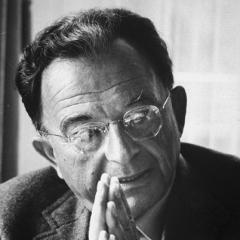
Erich Fromm
Erich Fromm

Erich Fromm, born on March 23, 1900 in Germany and died on March 18, 1980, was a renowned psychologist. His research covered a wide range of fields including anthropology, philosophy, and religion, particularly known for his studies on human psychology and interpersonal relationships. more

You May Also Like

“A woman must have a thorough knowledge of music, singing, drawing, dancing, and the modern languages; she must be well trained in the fighting styles of the Kyoto masters and the modern tactics and weaponry of Europe. And besides all this, she must possess a certain something in her air and manner of walking, the tone of her voice, her address and expressions, or the word will be but half-deserved. All this she must possess, and to all this she must yet add something more substantial, in the improvement of her mind by extensive reading, meditation, and Oriental discipline.”

“She was pointedly reminding me,' Professor Coles shares pensively, 'that she hadn't forgotten my repeated references to [Emerson's speech at Harvard], to the emphasis its author ... placed on character, the distinction he made between it and intellect. She was implying that even such a clarification, such an insistence, could all too readily become an aspect of the very problem Emerson was discussing---the intellect at work, analyzing its relationship to the lived life of conduct (character), with no apparent acknowledgement of the double irony of it all! The irony that the study of philosophy, say, even moral philosophy or oral reasoning, doesn't by any means necessarily prompt in either the teacher or the student a daily enacted goodness; and the further irony that a discussion of that very irony can prove equally sterile, in the sense that yet again one is being clever---with no apparent consequences, so far as one's every actions go.”

“The dreams of others must not be the hurdle for your's, but the pain of others must be the part of your version of dream, in the way that you could feel the satisfaction because you know deep in your heart that they deserve to be helped because they are in pain for true participation and for the improvement of many lives, The dream must have this essential trait of improving your character by lifting up the moral values of the society. In this packet of time and space, everyone has limited time with unlimited desires which creates bigger aspects, which makes us all different to have a vision to accomplish, here comes the difference that some move on this track selfishly and create hurdles for many other dreamers by participating in the destructive aspect of the universe and some are totally different they participate in constructive aspect by helping others by providing them proper source to keep them moving towards their visions, hence you win not just your own winnings but many others, you live not just your own life but many other lives, you taste the success of eternity on this planet, you feel a great joy in your life.”