Quotessence
Home / Quotes / Quote by Bell Hooks

Quote by Bell Hooks

“Oftentimes the poor are more addicted to excess because they are the most vulnerable to all the powerful messages in media and in our lives in general which suggest that the only way out of class shame is conspicuous consumption”

Quote by Bell Hooks

Work

Where We Stand: Class Matters

Browse quotes and source details for this work. more

Author
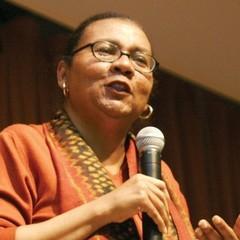
Bell Hooks
Bell Hooks

Bell Hooks, born Gloria Jean Watkins, is an American author, scholar, and activist. Her work primarily focuses on issues of race, gender, and social justice, particularly on feminist and black feminist thought. Hooks' works include novels, poetry, academic writings, and autobiographies, and her writing style is beloved by readers for its profound social insight and desire for change. more

You May Also Like

“The idea that we, our fathers and mothers, might be proud, hard-working and intelligent people doing something worthwhile, or even admirable, seemed to be beyond her. For a woman who saw success as being demonstrated through education, ambition, adventure and conspicuous professional achievement, we must have seemed a poor sample. I don't think anyone ever mentioned "university" in this school; no one wanted to go anyway - people that went away ceased to belong; they changed and could never really come back, we knew that in our bones. Schooling was a "way out", but we didn't want it, and we'd made our choice. Later I would understand that modern industrial communities are obsessed with the importance of "going somewhere" and "doing something with your life". The implication is an idea I have come to hate, that staying local and doing physical work doesn't count for much.”

“The whole landscape here is a complex web of relationships between farms, flocks and families. My old man can hardly spell common words, but has an encyclopaedic knowledge of landscape. I think it makes a mockery of conventional ideas about who is and isn't 'intelligent'. Some of the smartest people I have ever known are semi-literate.”

“I remember two boys being suspected of being gay in my class as a child in the 1970’s. Assuming there were also two girls that were gender challenged, that makes four people out of a class of thirty that had gender issues! In the 2020’s that number is believed to be around eight people. What has changed to cause this?”

“The end had left them stiff and fragile, unable to accept that the suburbs were gone, that there was no more escaping the mob, no more pretending floors and toilets scrubbed themselves and reading about black people in monthly book clubs the way you’d read about the construction of London’s sewers or the history of the fur trade, as a kind of boutique curiosity, instead of actually talking to them.”