Quotessence
Home / Authors / Amitav Ghosh
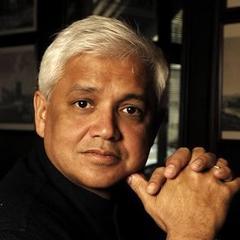
Amitav Ghosh

Amitav Ghosh Quotes

Author

Filter quotes by topic

Famous Amitav Ghosh Quotes

“In the old days, farmers would keep a little of their home-made opium for their families, to be used during illnesses, or at harvests and weddings; the rest they would sell to the local nobility, or to pykari merchants from Patna. Back then, a few clumps of poppy were enough to provide for a household's needs, leaving a little over, to be sold: no one was inclined to plant more because of all the work it took to grow poppies - fifteen ploughings of the land and every remaining clod to be built; purchases of manure and constant watering; and after all that, the frenzy of the harvest, each bulb having to be individually nicked, drained and scrapped. Such punishment was bearable when you had a patch or two of poppies - but what sane person would want to multiply these labours when there were better, more useful crops to grow, like wheat, dal, vegetables? But those toothsome winter crops were steadily shrinking in acreage: now the factory's appetite for opium seemed never to be seated. Come the cold weather, the English sahibs would allow little else to be planted; their agents would go from home to home, forcing cash advances on the farmers, making them sign /asámi/ contracts. It was impossible to say no to them: if you refused they would leave their silver hidden in your house, or throw it through a window. It was no use telling the white magistrate that you hadn't accepted the money and your thumbprint was forged: he earned commissions on the oppium adn would never let you off. And, at the end of it, your earnings would come to no more than three-and-a-half sicca rupees, just about enough to pay off your advance.”

“I'd been surprised by the depth of emotion that was invested in that curiously archaic phrase 'great power'. What would it mean, I'd asked myself, to the lives of working journalists, salaried technocrats and so on if India achieved 'great power status'? What were the images evoked by this tag? Now, walking through this echoing old palace, looking at the pictures in the corridors, this aspiration took on, for the first time, the contours of an imagined reality. This is what the nuclearists wanted: to sign treaties, to be pictured with the world's powerful, to hang portraits on their walls, to become ancestors. On the bomb they had pinned their hopes of bringing it all back.”

“That particular fear has the texture you can neither forget nor describe. It is like the fear of the victims of an earthquake, of people who have lost faith in the stillness of the earth. And yet it is not the same. It is without analogy for it is not comparable to the fear of nature, which is the most universal of human fears, nor to the fear of violence of the state, which is the commonest of modern fears. It is the fear that comes from the knowledge that normalcy is utterly contingent, that spaces that surround one, the streets that one inhabits, can become, suddenly and without warning, as hostile as a desert in a flash flood. It is this that sets apart the thousand million people who inhabit the subcontinent from the rest of the world - not language, not food, not music - it is the special quality of loneliness that grows out of the fear of the war between oneself and one's image in the mirror.”