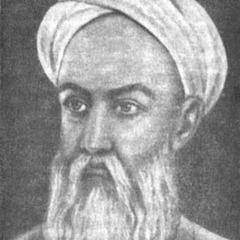
“Disease is an abnormal state of the body which primarily and independently produces a disturbance in the normal functions of the body. It may be an abnormality of temperament or form (structure). Symptom is a manifestation of some abnormal state in the body. It may be harmful as a colic pain or harmless as the flushing of cheeks in peripneumonia.” MayStatesBodyPainFormProduceHealthDiseaseNormalFunctionStructureManifestationCheeksSymptomsTemperamentAbnormalDisturbanceAbnormalityFlushingColic Book:The Canon of Medicine (al-Qānūn Fī'l-ṭibb) Source: The Canon of Medicine (al-Qānūn Fī'l-ṭibb)
“Medicine is the science by which we learn the various states of the human body in health and when not in health, and the means by which health is likely to be lost and, when lost, is likely to be restored back to health. In other words, it is the art whereby health is conserved and the art whereby it is restored after being lost. While some divide medicine into a theoretical and a practical [applied] science, others may assume that it is only theoretical because they see it as a pure science. But, in truth, every science has both a theoretical and a practical side.” HumansMayMeanArtStatesBodyLostSidesHealthPureMedicineAssumingVariousPracticalsDividesHuman BodyTheoreticalApplied Science Author:Avicenna
“Pain is a sensation produced by something contrary to the course of nature and this sensation is set up by one of two circumstances: either a very sudden change of the temperament (or the bad effect of a contrary temperament) or a solution of continuity.” TwoPainCoursesEffectsHealthCircumstancesSolutionsContrarySensationsTemperamentContinuitySudden Change Book:The Canon of Medicine (al-Qānūn Fī'l-ṭibb) Source: The Canon of Medicine (al-Qānūn Fī'l-ṭibb)