Quotessence
Home / Authors / Bart D. Ehrman
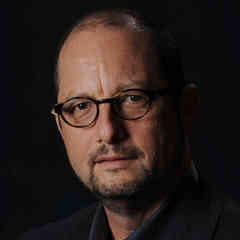
Bart D. Ehrman

Bart D. Ehrman Quotes

Professor

Filter quotes by topic

Famous Bart D. Ehrman Quotes

“One of the most amazing and perplexing features of mainstream Christianity is that seminarians who learn the historical-critical method in their Bible classes appear to forget all about it when it comes time for them to be pastors. They are taught critical approaches to Scripture, they learn about the discrepancies and contradictions, they discover all sorts of historical errors and mistakes, they come to realize that it is difficult to know whether Moses existed or what Jesus actually said and did, they find that there are other books that were at one time considered canonical but that ultimately did not become part of Scripture (for example, other Gospels and Apocalypses), they come to recognize that a good number of the books of the Bible are pseudonymous (for example, written in the name of an apostle by someone else), that in fact we don't have the original copies of any of the biblical books but only copies made centuries later, all of which have been altered. They learn all of this, and yet when they enter church ministry they appear to put it back on the shelf. For reasons I will explore in the conclusion, pastors are, as a rule, reluctant to teach what they learned about the Bible in seminary.”

“The doctrine of the bodily resurrection of the dead at the end of time originated about two centuries before the life of Jesus, and by his day it had become a common feature of Jewish thought. Later, at the hands of Christians, it came to be transformed into a teaching of postmortem rewards and punishments, the ideas of heaven and hell.”

“Christians wanted to affirm certain beliefs. But in some instances, if those affirmations were pressed to an extreme, they did not allow Christians to affirm other beliefs that they or other Christians also wanted to affirm. We have seen, for example, that some Christians wanted to affirm that Christ was human, but they did so to such an extent that they refused to acknowledge he was divine. Others wanted to affirm that he was divine and did so to such an extent that they refused to acknowledge he was human. Others tried to get around the problem by claiming that he was two different things: part of him was human and part of him was divine; but this solution brought division and disunity instead of harmony and oneness. Others wanted to affirm that since there can be only one God, Jesus could be divine only if he himself was that one God come to earth. But that solution ended up causing Christians to say that Jesus begot himself as the father to his own son, along with other equally confusing formulations. Some superscholars of the day such as Origen tried to resolve the problems in more sophisticated ways, but these views also led to ideas that were later deemed objectionable, [...] Throughout all these debates, we see Christian thinkers trying to figure it all out, wanting to make certain affirmations that they took to be gospel truth. [...] Eventually a Christology emerged that affirmed at one and the same time aspects of what opposing heresies affirmed, while refusing to deny what they denied. This led to a significantly refined but highly paradoxical understanding of how it is that Jesus could be God.”