Quotessence
Home / Authors / Ben Okri
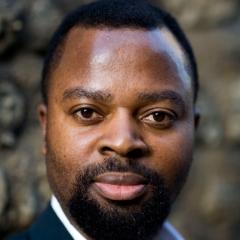
Ben Okri

Ben Okri Quotes

Poet

Filter quotes by topic

Famous Ben Okri Quotes

“There is a kind of expressed love which is easy to subvert. When a figure is loved for their deeds, their conquests, their heroism, their goodness, their love of the people, these are easy enough to destroy... But there is a kind of love which is felt for apparently no reason... A love, inspired, it seems, by the gods, which it is impossible to fight, distort, destroy, or weaken. In fact, the attempts to destroy such loves only strengthen them. And to do nothing allows them to continue to grow at their natural pace, inexoribly, till this love becomes a wide and silent adoration.”

“We plan our lives according to a dream that came to us in our childhood, and we find that life alters our plans. And yet, at the end, from a rare height, we also see that our dream was our fate. It's just that providence had other ideas as to how we would get there. Destiny plans a different route, or turns the dream around, as if it were a riddle, and fulfills the dream in ways we couldn't have expected.”

“What hope is there for individual reality or authenticity when the forces of violence and orthodoxy, the earthly powers of guns and bombs and manipulated public opinion make it impossible for us to be authentic and fulfilled human beings? The only hope is in the creation of alternative values, alternative realities. The only hope is in daring to redream one's place in the world - a beautiful act of imagination, and a sustained act of self becoming. Which is to say that in some way or another we breach and confound the accepted frontiers of things.”

“One human life is deeper than the ocean. Strange fishes and sea-monsters and mighty plants live in the rock-bed of our spirits. The whole of human history is an undiscovered continent deep in our souls. There are dolphins, plants that dream, magic birds inside us. The sky is inside us. The earth is in us.”

“It may be that what you could be haunts you. It is real. It is a weight you have to carry around. Each failure to become, to be, is a weight. Each state you could inhabit is a burden as heavy as any physical weight, but more so, because it weighs on your soul. It is the ghost of your possibilities hanging around your neck, an invisible albatros, potentials unknowingly murdered.”

“We disliked the rigours of existence, the unfulfilled longings, the enshrined injustices of the world, the labyrinths of love, the ignorance of parents, the fact of dying, and the amazing indifference of the Living in the midst of the simple beauties of the universe. We feared the heartlessness of human beings, all of whom are born blind, few of whom ever learn to see.”

“Bad things will happen and good things too. Your life will be full of surprises. Miracles happen only where there has been suffering. So taste your grief to the fullest. Don’t try and press it down. Don’t hide from it. Don’t escape. It is life too. It is truth. But it will pass and time will put a strange honey in the bitterness. That’s the way life goes.”

“Reading, therefore, is a co-production between writer and reader. The simplicity of this tool is astounding. So little, yet out of it whole worlds, eras, characters, continents, people never encountered before, people you wouldn’t care to sit next to in a train, people that don’t exist, places you’ve never visited, enigmatic fates, all come to life in the mind, painted into existence by the reader’s creative powers. In this way the creativity of the writer calls up the creativity of the reader. Reading is never passive.”

“The Nigerian storyteller Ben Okri says that ‘In a fractured age, when cynicism is god, here is a possible heresy: we live by stories, we also live in them. One way or another we are living the stories planted in us early or along the way, or we are also living the stories we planted — knowingly or unknowingly — in ourselves. We live stories that either give our lives meaning or negate it with meaninglessness. If we change the stories we live by, quite possibly we change our lives.’”