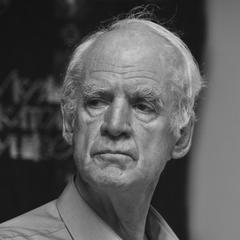
Sources of the Self: The Making of the... A source page for quotes linked to Charles Taylor. 0 quotes
“Our sin is our resistance to going along with God's initiative in making suffering reparative. We are deeply drawn towards God, but we also sense how following him will dislocate and transform beyond recognition the forms which have made life tolerable for us. We often react with fear, dismay, hostility. We are at war with ourselves, and responding differently to this inner conflict, we end up at war with each other. So it is undoubtedly true that the result of sin is much suffering. But this is by no means distributed according to desert. Many who are relatively innocent are swept up in this suffering, and some of the worse offenders get off lightly. The proper response to all this is not retrospective book-keeping, but making ourselves capable of responding to God's initiative. But now if that's what sin is, then one can sympathize with a lot of the modern critique of a religion which focuses on the evil tendencies of human nature, and the need for renunciation and sacrifice. This is not because humans are in fact angelic, or there is no point to sacrifice. It's just that focusing on how bad human beings can be, even if it's to refute the often over-rosy views of secular humanists with their reliance on human malleability and therapy, can only strengthen misanthropy, which certainly won’t bring you closer to God; and propounding sacrifice and renunciation for themselves takes you away from the main points, which is following God's initiative. That this can involve sacrifice, we well know from the charter act in this initiative, but renunciation is not is point.” SufferingSinHumanismTheology Book:A SECULAR AGE Source: A SECULAR AGE
“[M]y discovering my own identity doesn't mean that I work it out in isolation, but that I negotiate it through dialogue, partly overt, partly internal, with others.” SelfDialogueSelf Identity Book:Multiculturalism Source: Multiculturalism
“The ideally free Ego would be a lucid calculator of payoffs.” SelfFreedomEgomania Author:Charles Taylor
“The notion developed that the breach of reason with nature was a necessary one; that man had to make it in order to develop his powers of reason and abstraction. Schiller makes this point in his Letters on the Aestethic education of Man, as does Hölderin in his Hyperion Fragment. The belief was that the human destiny was to return to nature at a higher level, having made a synthesis of reason and desire.” ReasonNature Author:Charles Taylor
“Spontaneity at all levels is guided by the goal of getting it right; being clearly “forced” to come to some conclusion is not its negation, but its highest fulfillment.” SpontaneityKantNormativityTaylorMcdowellPolanyi Book:Retrieving Realism Source: Retrieving Realism
“There is a certain way of being human that is my way. I am called upon to live my life in this way, and not in imitation of anyone else's life. But this notion gives a new importance to being true to myself. If I am not, I miss the point of my life; I miss what being human is for me.” IfsWayGivingHumansCertainMissingImportanceNotionBeing TrueMy WayImitationBeing HumanLiving My LifeTrue To Myself Book:Multiculturalism Source: Multiculturalism
“There is a widespread sense of loss here, if not always of God, then at least of meaning.” IfsLoss Book:A SECULAR AGE Source: A SECULAR AGE
“Little countries do not have this luxury of defending themselves. We have to do it before the fact, not after the fact” LittlesCountryFactsLuxury Author:Charles Taylor
“What should have died along with communism is the belief that modern societies can be run on a single principle, whether that of planning under the general will or that of free-market allocations.” ShouldRunningBeliefPrinciplesModernShould HaveDiedPlanningCommunismFree MarketModern SocietyAllocation Book:The Ethics of Authenticity Source: The Ethics of Authenticity
“[E]ach of our voices has something unique to say. Not only should I not mold my life to the demands of external conformity; I can't even find the model by which to live outside myself. I can only find it within.” ShouldI CanVoiceDemandUniqueModelsConformityShould IMold Book:Multiculturalism Source: Multiculturalism
“We become full human agents, capable of understanding ourselves, and hence of defining our identity, through our acquisition of rich human languages of expression.” HumansLanguageUnderstandingRichIdentityExpressionCapableAgentsDefiningAcquisitionHuman Language Book:The Ethics of Authenticity Source: The Ethics of Authenticity
“We define our identity always in dialogue with, sometimes in struggle against, the things our significant others want to see in us. Even after we outgrow some of these others—our parents, for instance—and they disappear from our lives, the conversation with them continues within us as long as we live.” WantLongSometimesParentStruggleOur LivesIdentityConversationDisappearSignificantDialogueInstance Book:Philosophical Arguments Source: Philosophical Arguments
“To know who I am is a species of knowing where I stand. My identity is defined by the commitments and identifications which provide the frame or horizon within which I can try to determine from case to case what is good, or valuable, or what ought to be done, or what I endorse or oppose. In other words, it is the horizon within which I am capable of taking a stand.” KnowsTryingI CanDoneCasesKnowingIdentityOughtCapableCommitmentSpeciesDetermineValuableWho I AmDefinedHorizonIdentification Book:Sources of the Self: The Making of the Modern Identity Source: Sources of the Self: The Making of the Modern Identity