Quotessence
Home / Authors / Darold Treffert
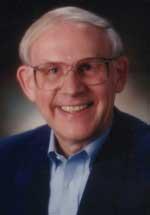
Darold Treffert

Darold Treffert Quotes

Psychiatrist

Filter quotes by topic

Famous Darold Treffert Quotes

“The ways in which acquired savants show up are usually the same ways that congenital, or non-acquired, savant syndrome shows up. They tend to show up in the same areas: music, art, math, visual, spatial skills, and calendar calculating, although calendar calculating probably isn't quite as prominent in that group. They tend to show up quite quickly, or sort of explode on the scene and they then tend to have an obsessive sort of forceful quality about them in the same way as savant skills. So they tend to show up in the same ways.”

“There are people at the extremes who aren't able to do anything musically, and then others sort of fall in the middle. And the same thing with math, and the same thing with art. You'll find people who are geniuses, or prodigies at the far end of the bell shaped curve, and I think you will find some of the acquired savants in that category who happened to have been endowed with that kind of talent, which explains why not everyone becomes an acquired savant.”

“There are some cases that have come to my attention where there's been a head injury, or getting struck by lightning and surviving, with really no disability or residual. So there are cases that I'm aware of where there's been some incident which triggered the acquired savant ability, but is not associated with long term disability, so that can occur. But I think that's probably the exception rather than the rule in that I think many of the acquired savants do end up with some residual disability.”

“When I met my first savant in 1962, I was impressed by the abilities in these youngsters who had severe disabilities. They appeared to me to be islands of genius in the sea of disability. So I've maintained that word picture since that time, of these islands of genius that are so striking and so jarring when you see them, especially in people who have severe disability.”

“A savant, by definition, is somebody who has a disability and, along with that disability, has some remarkable ability. Prodigies and geniuses have the remarkable abilities that the savant shows, but they do not have a disability. So, by definition, a savant includes someone with a disability, and a prodigy or genius are people who have these remarkable skills but they do not have a disability.”

“Savant syndrome is not a disorder in the same way as autism is a disorder or dementia is a disorder. Savant syndrome are some conditions that are superimposed and grafted on to some underlying disability. So savant syndrome is not a disease or disorder in and of itself. It is a collection of characteristics, or symptoms, or behaviors that have grafted on to the underlying disability.”

“The term syndrome generally appears to be a constellation, or collection, of similar traits or behaviors within an individual. So, savants do have sort of a constellation of symptoms, which is characterized by some spectacular skill, or skills, coupled with this massive memory which is grafted on to some underlying disability. So those three conditions quantify, in my mind, the term syndrome.”