Quotessence
Home / Authors / Dejan Stojanovic
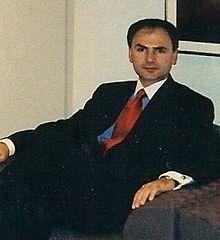
Dejan Stojanovic

Dejan Stojanovic Quotes

Poet

Filter quotes by topic

Famous Dejan Stojanovic Quotes

“The Reality (Universe, objects, matter, space) we measure is the Reality created by the Primary Quality of the Ultimate Source. When we measure the secondary quality (formerly primary), we are convinced it is as material as it appears. Yet, it is the reality programmed to be perceived as such by tertiary qualities (formerly secondary). Regardless of this “wrong” opinion or “perception,” Reality is not less real than we thought it was. It appears to be as it is, regardless of our views and acquired knowledge about it. We can and should adjust our worldview accordingly, but that does not affect us adversely. The change of perception should not necessarily be a drastic or detrimental worldview change. Quite to the contrary, this change shall boost progress and better align us with the cosmic organism we are part of. There is no reason to doubt or question reality, but we have to get used to a new, changed idea or understanding of reality since reality is not what we thought it was. Matter is not what we thought it was. Space is not what we thought it was. Our Reality is the Ultimate Web of Information. Whenever we measure something, we measure the information, the program, not space or matter per se. The only volume of Reality comes from Void.”

“Energy is the world-born phenomenon, the world that puts itself in motion and flies into space by receiving space into itself. From this point of view or the point of view of the Theory of Relativity, matter is indeed condensed energy. But, from the Absolute, or the Theory of the Absolute, both energy and matter are the dissolved forms of the primordial world of the Absolute. Therefore, energy is the “dissolved” Absolute, and matter is the formation of “energy” into objects of the multitude of the Absolute, which transforms from oneness and singularity into plurality (although oneness is never lost).”

“Although the Nothing is nothing, of and for itself, it is not nothing when interacting with the Being. This interaction activates the passive feature, void as a potential for space, of the Nothing through relationships, and it provides the medium, space, for its division and expansion into existence. In this way, the Nonbeing creates the Being partially but equally important. On the other hand, the Being transforms nothingness from nothing into real space.”

“Through the process of “materialization,” the Universal Source “inseminates” and “fertilizes” emptiness (original void) in the love-making cosmic hug between the Universal Source and Emptiness. Reality, even the one we can experience to some extent, is mind-boggling. There could be up to 2 trillion galaxies in our Universe only and up to 200 sextillion (200 billion trillion) stars.”

“In the magnificent and complex web of information in the Universe, everything affects everything else. It is “programmed” in ways that the objects of “physical” reality have some properties and features that affect tertiary qualities in a way that tertiary qualities recognize them with all their features. Depending on the level of tertiary qualities and dispersion, all the feelings, measures, weight of objects, pain, and anything we can imagine will be recognized and felt by tertiary qualities as a direct impact, effect, and consequence of secondary qualities in a literal sense. For instance, people would feel and be able to measure the weight of a physical object and all the rest and be able to feel pain, among other things, as if the whole energy and matter and all their properties and effects were real and not the “programmed” product of the immaterial Universal Source (Mind). Even after the “creation” of the world as we see it, it is still immaterial. Yet, we perceive its qualities and properties based on the “program,” which dictates our reaction to secondary (originally primary) qualities of the world.”

“Even if imagined matter existed independently but did not function as we described, there would only be dead matter. Matter, “artificially” made by the Universal Source, is still immaterial but is more real than if matter existed on its own, irrespective of the Universal Source or its impact. All we experience as energy and matter is immaterial information from the Ultimate Source of all Reality, without which there would be only absolute Nothingness.”

“The phenomenal world is only a different domain of the noumenal world. It is the “intention” of the noumenal to become, on some level, phenomenal. Although from the perspective of the phenomenal, noumenal seems to be metaphysical and transcendent, from the perspective of the noumenal, phenomenal is immanent. Regardless of not having direct immaterial access to the noumenal, through our experience of the phenomenal, we experience the noumenal at the same time.”

“In my system of thought, noumenal is the immaterial oneness or singularity, and the phenomenal is “material” plurality. Kant thought that the merging of phenomena and noumena transforms everything into appearances and that this would be the artificial way or “illegitimate” way to experience noumena. Since the created world is an “illusion” (conditionally speaking), everything stays noumena. Still, on the superficial level of the made reality, we experience the hierarchies and degrees of the qualities of the new reality.”

“The things in themselves (or the thing in itself) do not exist in the noumenal realm; they are only the potential of noumenal. The Noumenal exercises its potential in the phenomenal realm. There is no way to experience a thing in itself because appearances are not direct reflections or copies of ideal forms/ideas nor the appearances of things in themselves, but the expressions of the noumenal through phenomenal. Appearances do not have the corresponding reality of the things in themselves in the noumenal but are the products of the absolute potential of the noumenal.”

“When we use the word illusion, we mean something is not real in a broader sense. Yet, how do we define reality and illusion? Does reality depend on our senses, understanding, and definitions or on what it is objectively? Why would our senses, “definitions,” and “understanding,” or lack of it, not be reality irrespective of our idea of reality? What constitutes reality? Who decides what reality is? Would it not be logical that whatever exists is real? Even if something does not exist, we can imagine the reality of nonexistence. If everything that exists is real, we can only talk about the degrees or levels of reality without denying reality to something we do not understand. Our lack of understanding shall not be an obstacle to reality but a motivator to try harder and get closer to the most “real” of what is possible.”