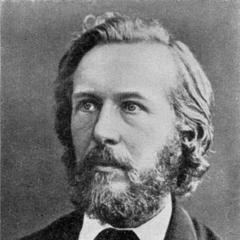
German philosopher, biologist, artist, born on February 16, 1834, and died on August 9, 1919. Ernst Haeckel is renowned for his contributions to the fields of evolution, morphology, cytology, and the philosophy of natural sciences.
Related Quotes
Source: The History Of Creation V2: Or The Development Of The Earth And Its Inhabitants By The Action Of Natural Causes
Source: The History of Creation: Or The Development of the Earth and Its Inhabitants by the Action of Natural Causes. A Popular Exposition of the Doctrine of Evolution in General, and of that of Darwin, Goethe, and Lamarck in Particular. From the 8th German Ed. of Ernst Haeckel ... The Translation Rev. by E. Ray Lankester
Source: The Evolution of Man: A Popular Exposition of the Principal Points of Human Ontogeny and Phylogeny
Source: Wonders of life
Source: Wonders of life
Source: The History of Creation, Or, The Development of the Earth and Its Inhabitants by the Action of Natural Causes: A Popular Exposition of the Doctrine of Evolution in General, and of that of Darwin, Goethe, and Lamarck in Particular
Source: the riddle of the universe
Source: Eternity; World-war Thoughts on Life and Death, Religion, and the Theory of Evolution
“Man is not above nature, but in nature.”
Source: The Evolution of Man: A Popular Exposition of the Principal Points of Human Ontogeny and Phylogeny
Source: the riddle of the universe
Source: The History of Creation: Or The Development of the Earth and Its Inhabitants by the Action of Natural Causes. A Popular Exposition of the Doctrine of Evolution in General, and of that of Darwin, Goethe, and Lamarck in Particular. From the 8th German Ed. of Ernst Haeckel ... The Translation Rev. by E. Ray Lankester
Source: The History of Creation: Or The Development of the Earth and Its Inhabitants by the Action of Natural Causes. A Popular Exposition of the Doctrine of Evolution in General, and of that of Darwin, Goethe, and Lamarck in Particular. From the 8th German Ed. of Ernst Haeckel ... The Translation Rev. by E. Ray Lankester
Source: Wonders of life