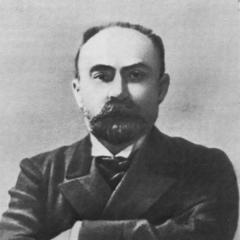
“We know today that there is no such thing as absolute truth, that everything is relative, that everything is dependent on the conditions of time and place; but precisely for that reason, we should be very cautious in judging the “ignorance” of various historical periods. Their ignorance, to the extent that it is manifested in their characteristic social movements, aspirations and ideals, is also relative.” JudgmentAbsolute TruthHistorical MaterialismRelative Truth1891 Book:The Materialist Conception of History Source: The Materialist Conception of History
“Passing to historical nations, we must first point out that in relation to them the word race cannot and should not be used at all. We do not know of any historical nation that can be regarded as racially pure; each of them is the product of an extremely lengthy and intense process of interbreeding and intermingling of different ethnic elements. Now try, after this, to determine the influence of “race” on the history of the ideologies of any nation! At a first glance it seems that nothing could be simpler and more correct than the idea that natural environment influences national temperament and, through temperament, the history of the nation’s intellectual and aesthetic development. But if Labriola had only recalled the history of his own country, he would have been convinced of the erroneousness of this idea. The modern Italians are surrounded by the same natural environment as that in which the ancient Romans lived, yet how unlike is the “temperament” of our modern tributaries of Menelik to the temperament of the stern conquerors of Carthage! If we were to undertake to explain the history of Italian art, for example, by the Italian temperament, we should very soon be confronted by the baffling question why this temperament, for its part, varied so profoundly at different times and in different parts of the Apennine Peninsula.” RaceNationalismTemperamentHistorical MaterialismNational Character1897 Book:The Materialist Conception of History Source: The Materialist Conception of History
“Until the individual has won this freedom by heroic effort in philosophical thinking he does not fully belong to himself, and his mental tortures are the shameful tribute he pays to external necessity that stands opposed to him. But as soon as this individual throws off the yoke of this painful and shameful restriction he is born for a new, full and hitherto never experienced life; and his free actions become the conscious and free expression of necessity. Then he will become a great social force; and then nothing can, and nothing will, prevent him from Bursting on cunning falsehood Like a storm of wrath divine…” Class ConsciousnessFreedom And Necessity Book:The Role of the Individual in History Source: The Role of the Individual in History
“… I am disappointed by the events of the last days [October 1917] not because I do not desire the triumph of the working class in Russia but precisely because I pray for it with all the strength of my soul…. [We must] remember Engels' remark that there would be no greater historical tragedy for the working class than to seize political power when it is not ready for it. [Such a seizure of power] would compel it to retreat far back from the positions which were won in February and March of the present year.” 1917EngelCommunist Revolution Book:The Gulag Archipelago Source: The Gulag Archipelago
“Only the person who does not evade conflict and directs his efforts in keeping with the course of society's development can be an effective leader.” PersonsDoeCoursesFreedomEffortLeaderDemocracyDevelopmentConflict Author:Georgi Plekhanov
“Politics needs a flexible mind, for it has no immutable or eternal rules. In politics immutable or eternal rules lead to inevitable and swift defeat.” NeedsMindFreedomDemocracyEternalDefeatInevitableFlexible Author:Georgi Plekhanov