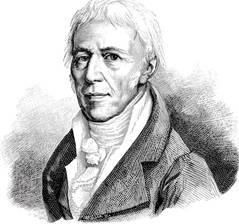
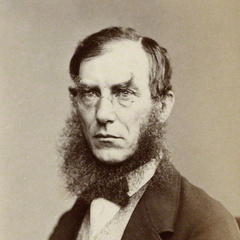
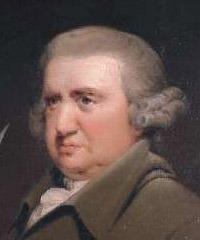
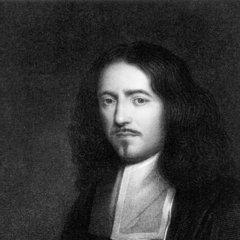
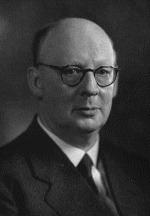
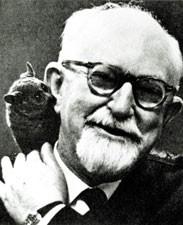
Jean-Baptiste Lamarck was a French naturalist and biologist, a key figure in the history of science. Born on August 1, 1744, in Bazentin, Oise, France, and died on December 18, 1829, in Paris, France. He is known for his contributions to the theory of evolution, particularly his theory of inheritance of acquired characteristics, which suggested that an organism could pass on traits acquired during its lifetime to its offspring. Although his theories are now considered outdated, they laid the groundwork for the modern understanding of evolution.
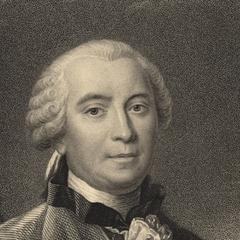
Georges-Louis Leclerc, Comte de Buffon, was a French naturalist, mathematician, and encyclopedist. He is renowned for his comprehensive work on natural history, 'Histoire naturelle, générale et particulière', which was a cornerstone of the Enlightenment.
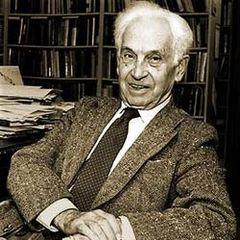
German-American biologist and a pioneer in evolutionary biology, Ernst Mayr made significant contributions to the development of modern evolutionary theory. His research in systematics, speciation, and biological classification had a profound impact on the field.
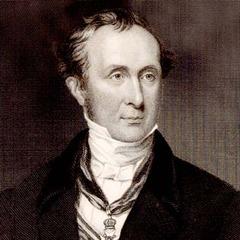
Sir Roderick Murchison, a British baronet, was a prominent geologist. Born on February 22, 1792, and died on October 22, 1871, he made significant contributions to the field of geology, particularly in the study of petrology.
Joseph Dalton Hooker was a British botanist born on June 30, 1817, and died on December 10, 1911. He is renowned for his contributions to plant taxonomy and plant geography, serving as the director of the Royal Botanic Gardens, Kew, and participating in several scientific expeditions.
Anthony Standen was an accomplished British author known for his profound insights into history and culture. His works covered a wide range of historical themes from the Middle Ages to the modern era, celebrated for their unique narrative style and attention to detail.
Erasmus Darwin was an English physician, poet, and scientist, known for his contributions to the field of medicine and his work in evolutionary theory. He was the grandfather of Charles Darwin, the famous naturalist.
Giorgio Baglivi was an Italian physician born on September 8, 1668, and died on June 15, 1707. He made significant contributions to the field of medicine, particularly in anatomy and physiology.
Marcello Malpighi was an Italian physician and scientist, renowned for his substantial contributions to anatomy and histology. Often hailed as the father of microscopic anatomy, he made numerous discoveries using the newly invented microscope. Malpighi's work laid the groundwork for modern histology, and his detailed studies of the body's structures and functions have had a lasting impact on medical science.
German chemist born on May 27, 1883, and died on November 22, 1943. Wolfgang Ostwald made significant contributions to the field of chemistry, particularly in colloidal chemistry and catalysis.
George Gaylord Simpson was a renowned paleontologist and evolutionary theorist, known for his extensive research on dinosaurs and ancient reptiles. His work has had a profound impact on modern paleontology and evolutionary theory.