Quotessence
Home / Authors / Joanna Russ
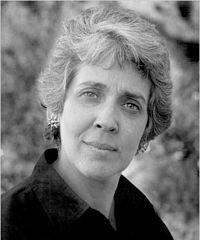
Joanna Russ

Joanna Russ Quotes

Writer

Filter quotes by topic

Famous Joanna Russ Quotes

“There is the vanity training, the obedience training, the self-effacement training, the deference training, the dependency training, the passivity training, the rivalry training, the stupidity training, the placation training. How am I to put this together with my human life, my intellectual life, my solitude, my transcendence, my brains, and my fearful, fearful ambition? I failed miserably and thought it was my own fault. You can't unite woman and human any more than you can unite matter and anti-matter; they are designed to not to be stable together and they make just as big an explosion inside the head of the unfortunate girl who believes in both.”

“Finding The Man. Keeping The Man. Not scaring The Man, building up The Man, following The Man, soothing The Man, flattering The Man, deferring to The Man, changing your judgement for The Man, changing your decisions for The Man, polishing floors for The Man, being perpetually conscious of your appearance for The Man, being romantic for The Man, hinting to The Man, losing yourself in The Man. 'I never had a thought that wasn't yours.' Sob, sob. Whenever I act like a human being, they say, 'What are you getting upset about?' They say: of course you'll get married. They say: of course you're brilliant. They say: of course you'll get a PhD and then sacrifice it to have babies. They say: if you don't, you're the one who'll have two jobs and you can make a go of it if you're exceptional, which very few women are, and if you find a very understanding man. As long as you don't make more money than he does. How do they expect me to live all this junk?”

“The game is a dominance game called I Must Impress This Woman. Failure makes the active player play harder. Wear a hunched back or a withered arm; you will then experience the invisibility of the passive player. I'm never impressed -- no woman ever is -- it's just a cue that you like me and I'm supposed to like that. If you really like me, maybe I can get you to stop. Stop; I want to talk to you! Stop; I want to see you! Stop; I'm dying and disappearing! SHE: Isn't it just a game? HE: Yes, of course. SHE: And if you play the game, it means you like me, doesn't it? HE: Of course. SHE: Then if it's just a game and you like me, you can stop playing. Please stop. HE: No. SHE: Then I won't play. HE: Bitch! You want to destroy me. I'll show you. (He plays harder) SHE: All right. I'm impressed. HE: You really are sweet and responsive after all. You've kept your femininity. You're not one of those hysterical feminist bitches who wants to be a man and have a penis. You're a woman. SHE: Yes. (She kills herself)”

“There's no being out too late in Whileaway, or up too early, or in the wrong part of town, or unescorted. You cannot fall out of the kinship web and become sexual prey for strangers, for there is no prey and there are no strangers -- the web is world-wide. In all of Whileaway there is no one who can keep you from going where you please (though you may risk your life, if that sort of thing appeals to you), no one who will follow you and try to embarrass you by whispering obscenities in your ear, no one who will attempt to rape you, no one who will warn you of the dangers of the street, no one who will stand on street corners, hot-eyed and vicious, jingling loose change in his pants pocket, bitterly bitterly sure that you're a cheap floozy, hot and wild, who likes it, who can't say no, who's making a mint off it, who inspires him with nothing but disgust, and who wants to drive him crazy.”

“She's a bright girl. She learned in her thirteenth year that you can get old films of Mae West or Marlene Dietrich (who is a Vulcan; look at the eyebrows) after midnight on UHF if you know where to look, at fourteen that pot helps, at fifteen that reading's even better. She learned, wearing her rimless glasses, that the world is full of intelligent, attractive, talented women who manage to combine careers with their primary responsibilities as wives and mothers and whose husbands beat them. She's put a gold circle pin on her shirt as a concession to club day. She loves her father and once is enough. Everyone knows that much as women want to be scientists and engineers, they want foremost to be womanly companions to men (what?) and caretakers of childhood; everyone knows that a large part of a woman's identity inheres in the style of her attractiveness. Laur is daydreaming. She looks straight before her, blushes, smiles, and doesn't see a thing... Laur is daydreaming that she's Genghis Khan.”

“I think," said my neighbour, her chin very high in the air (and still spiffed, I am glad to say) "that women who've never married and never had children have missed out on the central experiences of life. They are emotionally crippled." Now what am I supposed to say to that? I ask you. That women who've never won the Nobel Peace Prize have also experienced a serious deprivation? It's like taking candy from a baby; the poor thing isn't allowed to get angry, only catty. I said, "That's rude, and silly," and helped her to mashed potatoes. ...."You can't catch a man." "That's why I'll never be abandoned," said I. Fortunately she did not hear me. Did I say taking candy from babies? Rather, eating babies, killing babies, abandoning babies. So sad, so easy.”

“What did we talk about? I don't remember. We talked so hard and sat so still that I got cramps in my knee. We had too many cups of tea and then didn't want to leave the table to go to the bathroom because we didn't want to stop talking. You will think we talked of revolution but we didn't. Nor did we talk of our own souls. Nor of sewing. Nor of babies. Nor of departmental intrigue. It was political if by politics you mean the laboratory talk that characters in bad movies are perpetually trying to convey (unsuccessfully) when they Wrinkle Their Wee Brows and say (valiantly--dutifully--after all, they didn't write it) "But, Doctor, doesn't that violate Finagle's Constant?" I staggered to the bathroom, released floods of tea, and returned to the kitchen to talk. It was professional talk. It left my grey-faced and with such concentration that I began to develop a headache. We talked about Mary Ann Evans' loss of faith, about Emily Brontë's isolation, about Charlotte Brontë's blinding cloud, about the split in Virginia Woolf's head and the split in her economic condition. We talked about Lady Murasaki, who wrote in a form that no respectable man would touch, Hroswit, a little name whose plays "may perhaps amuse myself," Miss Austen, who had no more expression in society than a firescreen or a poker. They did not all write letters, write memoirs, or go on the stage. Sappho--only an ambiguous, somewhat disagreeable name. Corinna? The teacher of Pindar. Olive Schriener, growing up on the veldt, wrote on book, married happily, and ever wrote another. Kate Chopin wrote a scandalous book and never wrote another. (Jean has written nothing.). There was M-ry Sh-ll-y who wrote you know what and Ch-rl-tt- P-rk-ns G-lm-an, who wrote one superb horror study and lots of sludge (was it sludge?) and Ph-ll-s Wh--tl-y who was black and wrote eighteenth century odes (but it was the eighteenth century) and Mrs. -nn R-dcl-ff- S-thw-rth and Mrs. G--rg- Sh-ld-n and (Miss?) G--rg-tt- H-y-r and B-rb-r- C-rtl-nd and the legion of those, who writing, write not, like the dead Miss B--l-y of the poem who was seduced into bad practices (fudging her endings) and hanged herself in her garter. The sun was going down. I was blind and stiff. It's at this point that the computer (which has run amok and eaten Los Angeles) is defeated by some scientifically transcendent version of pulling the plug; the furniture stood around unknowing (though we had just pulled out the plug) and Lady, who got restless when people talked at suck length because she couldn't understand it, stuck her head out from under the couch, looking for things to herd. We had talked for six hours, from one in the afternoon until seven; I had at that moment an impression of our act of creation so strong, so sharp, so extraordinarily vivid, that I could not believe all our talking hadn't led to something more tangible--mightn't you expect at least a little blue pyramid sitting in the middle of the floor?”