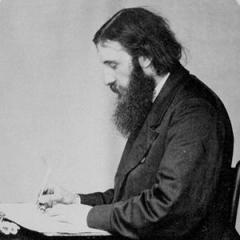
George MacDonald
George MacDonald was a 19th-century Scottish author known for his fantasy literature and religious thought. His works had a profound influence on later writers, such as J.R.R. Tolkien and C.S. Lewis.
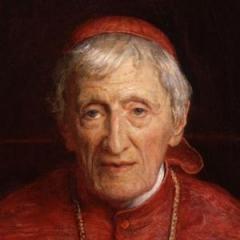
George MacDonald was a 19th-century Scottish author known for his fantasy literature and religious thought. His works had a profound influence on later writers, such as J.R.R. Tolkien and C.S. Lewis.
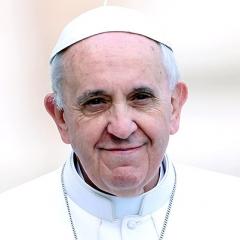
Pope Francis, born Jorge Mario Bergoglio on December 17, 1936 in Buenos Aires, Argentina, is the 266th Pope of the Catholic Church. Elected on March 13, 2013, he is the first pope from the Americas, the Southern Hemisphere, and the Jesuit order. Known for his humility, focus on the poor, and social justice, he advocates for church reform, environmental protection, and interfaith dialogue. His papacy addresses global issues like the COVID-19 pandemic and migration crises.
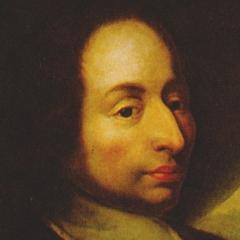
Blaise Pascal was a French mathematician, physicist, philosopher, and theologian. He was born on June 19, 1623, and died on August 19, 1662. Pascal's contributions to mathematics were particularly significant, with groundbreaking work in probability theory, analytical geometry, and early calculus.
German mystic philosopher, born in 1260 and died in 1328. His thoughts have had a profound impact on the world, and he is considered one of the most important representatives of medieval philosophy.
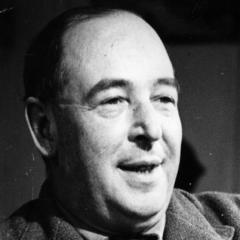
C. S. Lewis was a British novelist, academic, and Christian theologian. He is renowned for his fictional works, particularly The Chronicles of Narnia, a series of fantasy novels that have become a beloved classic of children's literature. Lewis also penned adult fiction, including the science fiction trilogy Out of the Silent Planet and the space trilogy. His non-fiction works, such as Mere Christianity and The Problem of Pain, have had a significant impact on Christian thought and spirituality.
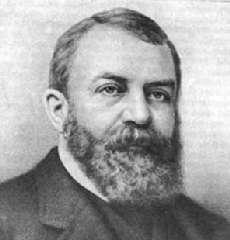
Dwight L. Moody was a prominent American evangelist, born on February 5, 1837, and died on December 22, 1899. He is known for his contributions to the spread of the Gospel and Christian education.
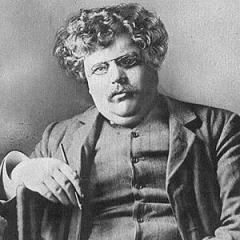
Gilbert K. Chesterton was an English writer, critic, and theologian, born on May 29, 1874, and died on June 14, 1936. Known for his unique literary style and profound philosophical thinking, Chesterton's works spanned a variety of genres, including novels, poetry, drama, and criticism.
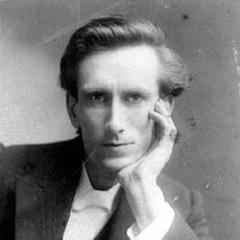
Oswald Chambers (July 24, 1874 – November 15, 1917) was a Scottish Christian minister, teacher, and writer, best known for his devotional classic 'My Utmost for His Highest'. Born in Aberdeen, he studied art in London before feeling called to ministry. He taught at the Bible Training College in London and served as a YMCA chaplain to British soldiers in Egypt during World War I, where he died of complications from appendicitis. His works, compiled posthumously by his wife Gertrude, have inspired millions worldwide.
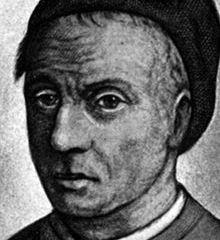
Thomas a Kempis (1380 - July 25, 1471) was a German canon, known for his spiritual writings. He is best known for his work 'The Imitation of Christ,' which has had a profound impact on Christian thought and practice.
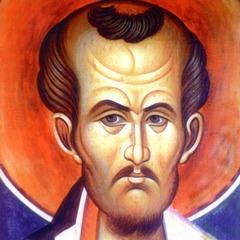
Saint John Chrysostom (c. 347 – September 14, 407) was an early Church Father and Archbishop of Constantinople, renowned for his eloquent preaching and oratory, earning the epithet 'Chrysostom' meaning 'golden-mouthed.' Born in Antioch, he received a classical education and later became a hermit. His sermons emphasized moral reform, social justice, and biblical exegesis, often criticizing luxury and corruption. His conflicts with the imperial court and clergy led to multiple exiles, and he died during a forced march. His extensive writings, including homilies, commentaries, and letters, profoundly influenced Eastern Christianity. He is venerated as a saint and Doctor of the Church in Eastern Orthodoxy, Catholicism, and other traditions.