Quotessence
Home / Authors / John Henry Newman Books
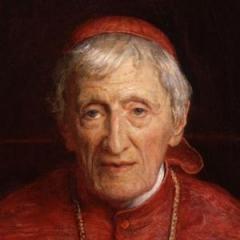
John Henry Newman

John Henry Newman Books

Priest

Lyra apostolica

A source page for quotes linked to John Henry Newman.
0 quotes

Works

A source page for quotes linked to John Henry Newman.

0 quotes

Related Quotes

“God has created me to do Him some definite service. He has committed some work to me which He has not committed to another. I have my mission. I may never know it in this life, but I shall be told it in the next. I am a link in a chain, a bond of connection between persons. He has not created me for naught. I shall do good; I shall do His work. I shall be an angel of peace, a preacher of truth in my own place, while not intending it if I do but keep His commandments. Therefore, I will trust Him, whatever I am, I can never be thrown away. If I am in sickness, my sickness may serve Him, in perplexity, my perplexity may serve Him. If I am in sorrow, my sorrow may serve Him. He does nothing in vain. He knows what He is about. He may take away my friends. He may throw me among strangers. He may make me feel desolate, make my spirits sink, hide my future from me. Still, He knows what He is about.”

“In morals, as in physics, the stream cannot rise higher than its source. Christianity raises men from earth, for it comes from heaven; but human morality creeps, struts, or frets upon the earth's level, without wings to rise. The Knowledge School does not contemplate raising man above himself; it merely aims at disposing of his existing powers and tastes, as is most convenient, or is practicable under circumstances. It finds him, like the victims of the French Tyrant, doubled up in a cage in which he can neither lie, stand, sit, nor kneel, and its highest desire is to find an attitude in which his unrest may be least. Or it finds him like some musical instrument, of great power and compass, but imperfect; from its very structure some keys must ever be out of tune, and its object, when ambition is highest, is to throw the fault of its nature where least it will be observed. It leaves man where it found him—man, and not an Angel—a sinner, not a Saint; but it tries to make him look as much like what he is not as ever it can. The poor indulge in low pleasures; they use bad language, swear loudly and recklessly, laugh at coarse jests, and are rude and boorish. Sir Robert would open on them a wider range of thought and more intellectual objects, by teaching them science; but what warrant will he give us that, if his object could be achieved, what they would gain in decency they would not lose in natural humility and faith? If so, he has exchanged a gross fault for a more subtle one. "Temperance topics" stop drinking; let us suppose it; but will much be gained, if those who give up spirits take to opium? Naturam expellas furcâ, tamen usque recurret, is at least a heathen truth, and universities and libraries which recur to heathenism may reclaim it from the heathen for their motto.”

“People say to me, that it is but a dream to suppose that Christianity should regain the organic power in human society which it once possessed. I cannot help that; I never said it could. I am not a politician; I am proposing no measures, but exposing a fallacy, and resisting a pretence. Let Benthamism reign, if men have no aspirations; but do not tell them to be romantic, and then solace them with glory; do not attempt by philosophy what once was done by religion. The ascendancy of Faith may be impracticable, but the reign of Knowledge is incomprehensible. The problem for statesmen of this age is how to educate the masses, and literature and science cannot give the solution.”

“Doubtless these desperate and dark struggles are to be called superstition when viewed by the side of true religion ; and it is easy enough to speak of them as superstition, when we have been informed of the gracious and joyful result in which the scheme of Divine Governance issues. But it is man’s truest and best religion, before the Gospel shines on him. If our race be in a fallen and depraved state, what ought our religion to be but anxiety and remorse till God comfort us? Surely to be in gloom— -to view ourselves with horror — to look about to the right hand and to the left for means of safety — to catch at everything, yet trust in nothing— to do all we can, and try to do more than all — and, after all, to wait in miserable suspense, naked and shivering, among the trees of the garden, for the hour of His coming, and meanwhile to fancy sounds of woe in every wind stirring the leaves about us — in a word, to be superstitious — is nature’s best offering, her most acceptable service, her most mature and enlarged wisdom, in the presence of a holy and offended God .”

“THRICE bless'd are they, who feel their loneliness; To whom nor voice of friends nor pleasant scene Brings aught on which the sadden'd heart can lean; Yea, the rich earth, garb'd in her daintiest dress Of light and joy, doth but the more oppress, Claiming responsive smiles and rapture high; Till, sick at heart, beyond the veil they fly, Seeking His Presence, who alone can bless. Such, in strange days, the weapons of Heaven's grace; When, passing o'er the high-born Hebrew line, He moulds the vessel of His vast design; Fatherless, homeless, reft of age and place, Sever'd from earth, and careless of its wreck, Born through long woe His rare Melchizedek.”

“From My Life's Work by Cardinal Newman God has created me to do Him some definite service. He has committed some work to me which He has not committed to another. I have my mission. I may never know it in this life, but I shall be told it in the next...I shall do good. I shall do His work if I do but keep His commandments and serve Him in my calling. Therefore I will trust Him. Whatever, wherever I am. I can never be thrown away. If I am in sickness, my sickness may serve Him, if I am in sorrow, my sorrow may serve Him. My sickness, or perplexity, or sorrow may be necessary causes of some great end, which is quite beyond us. He does nothing in vain.”

“Brutes gaze on sights, they are arrested by sounds; and what they see and what they hear are sights and sounds only. The intellectof man, on the contrary, energises as well as his eye or ear, and perceives in sights or sounds something beyond them. It seizes and unites what the senses present to it; it grasps and forms what need not be seen or heard except in detail. It discerns in lines and colors, or in tones, what is beautiful and what is not. It gives them a meaning, and invests them with an idea.”

“Christ is already in that place of peace, which is all in all. He is on the right hand of God. He is hidden in the brightness of the radiance which issues from the everlasting throne. He is in the very abyss of peace, where there is no voice of tumult or distress, but a deep stillness--stillness, that greatest and most awful of all goods which we can fancy; that most perfect of joys, the utter profound, ineffable tranquillity of the Divine Essence. He has entered into His rest. That is our home; here we are on a pilgrimage, and Christ calls us to His many mansions which He has prepared.”

“After the fever of life--after wearinesses, sicknesses, fightings and despondings, languor and fretfulness, struggling and failing, struggling and succeeding--after all the changes and chances of this troubled and unhealthy state, at length comes death--at length the white throne of God--at length the beatific vision.”

“God has created me to do him some definite service; He has committed some work to me which he has not committed to another. I have my mission; I never may know it in this life, but I shall be told it in the next. I have a part in a great work; I am a link in a chain, a bond of connection between persons. He has not created me for naught. I shall do good, I shall do His work; I shall be an angel of peace, a preacher of truth in my own place, while not intending it, if I do but keep His commandments and serve Him in my calling.”

“There are wounds of the spirit which never close and are intended in God's mercy to bring us nearer to Him, and to prevent us leaving Him by their very perpetuity. Such wounds then may almost be taken as a pledge, or at least as a ground for a humble trust, that God will give us the great gift of perseverance to the end. This is how I comfort myself in my own great bereavements.”

“How can we feel our need of His help, or our dependence on Him, or our debt to Him, or the nature of His gift to us, unless we know ourselves.... This is why many in this age (and in every age) become infidels, heretics, schismatics, disloyal despisers of the Church.... They have never had experience of His power and love, because they have never known their own weakness and need.”