“In morals, as in physics, the stream cannot rise higher than its source. Christianity raises men from earth, for it comes from heaven; but human morality creeps, struts, or frets upon the earth's level, without wings to rise. The Knowledge School does not contemplate raising man above himself; it merely aims at disposing of his existing powers and tastes, as is most convenient, or is practicable under circumstances. It finds him, like the victims of the French Tyrant, doubled up in a cage in which he can neither lie, stand, sit, nor kneel, and its highest desire is to find an attitude in which his unrest may be least. Or it finds him like some musical instrument, of great power and compass, but imperfect; from its very structure some keys must ever be out of tune, and its object, when ambition is highest, is to throw the fault of its nature where least it will be observed. It leaves man where it found him—man, and not an Angel—a sinner, not a Saint; but it tries to make him look as much like what he is not as ever it can. The poor indulge in low pleasures; they use bad language, swear loudly and recklessly, laugh at coarse jests, and are rude and boorish. Sir Robert would open on them a wider range of thought and more intellectual objects, by teaching them science; but what warrant will he give us that, if his object could be achieved, what they would gain in decency they would not lose in natural humility and faith? If so, he has exchanged a gross fault for a more subtle one. "Temperance topics" stop drinking; let us suppose it; but will much be gained, if those who give up spirits take to opium? Naturam expellas furcâ, tamen usque recurret, is at least a heathen truth, and universities and libraries which recur to heathenism may reclaim it from the heathen for their motto.”
Quote by John Henry Newman
Work
The Tamworth Reading Room. Letters on an Address Delivered by Sir Robert Peel, Bart., M.P. on the Establishment of a Reading Room at Tamworth. by Catholicus [i.E. J. H. Newman], Etc.
Browse quotes and source details for this work. more
Author
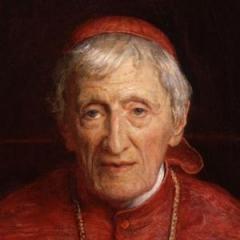
John Henry Newman
John Henry Newman was an influential British theologian, philosopher, and writer, known for his contributions to religious philosophy, moral philosophy, and literary criticism. He was born on February 21, 1801, and died on August 11, 1890. Newman was educated at Oxford University and later became a Catholic priest, holding several important positions in the church in Britain and Ireland. more
You May Also Like
Source: Nefando
Source: Light Inspired
“More often than not moral richness ensues material meagerness.”