Quotessence
Home / Authors / Paul Davies
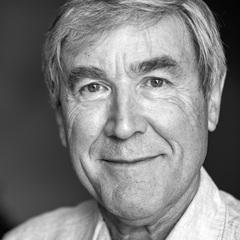
Paul Davies

Paul Davies Quotes

Physicist

Filter quotes by topic

Famous Paul Davies Quotes

“I should say we know that there are many, many other Earths out there. We're almost certain that there will be upwards of a billion Earth-like planets in our galaxy alone, so there is no lack of real estate where life might happen, but what we don't know is how likely it is given the real estate, given a wonderful pristine planet like Earth how likely is it that life will pop up inhabited? We don't know the answer to that.”

“What we want is another sample of life, which is not on our tree of life at all. All life that we've studied so far on Earth belongs to the same tree. We share genes with mushrooms and oak trees and fish and bacteria that live in volcanic vents and so on that it's all the same life descended from a common origin. What we want is a second tree of life. We want alien life, alien not necessarily in the sense of having come from space, but alien in the sense of belonging to a different tree altogether. That is what we're looking for, "life 2.0."”

“The problem here is that a civilization that is 1,000 light years away doesn't know we exist. They don't know that we have radio telescopes here on Earth because they see Earth as it was 1,000 years ago. Nothing can travel faster than light, so however good their instruments they can't see in affect the future. So there is no particular reason they should be sending us messages at this time.”

“If we're thinking about old civilizations, those that formed a long time ago and there were stars and planets around long before Earth even existed, then these are going to be towards the center of the galaxy. That is the place to look if you think there are ancient civilizations that have made beacons or some other way of attracting our attention.”

“So how can we test the idea that the transition from nonlife to life is simple enough to happen repeatedly? The most obvious and straightforward way is to search for a second form of life on Earth. No planet is more Earth-like than Earth itself, so if the path to life is easy, then life should have started up many times over right here.”

“In time, [a Martian] colony would grow to the point of being self- sustaining. When this stage was reached, humanity would have a precious insurance policy against catastrophe at home. During the next millennium there is a significant chance that civilization on Earth will be destroyed by an asteroid, a killer plague or a global war. A Martian colony could keep the flame of civilization and culture alive until Earth could be reverse-colonized from Mars.”