Quotessence
Home / Authors / Rick Bass
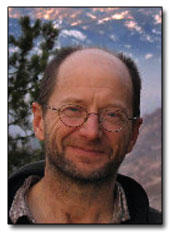
Rick Bass

Rick Bass Quotes

Writer

Filter quotes by topic

Famous Rick Bass Quotes

“His beautiful silver hair had turned snow white over the course of just a few days following Chubb's death, and in a way this made him seem younger: made him seem to fit the white caliche landscape even better, and blend in. His skin was turning whiter, too, even after he had been out in the sun, It was beautiful, watching him get old-ancient-now that I had realized he too was going to die. This time I could understand it. It was like watching some graceful diver plunge in slow motion-the slowest-from the top of an improbably high cliff, down to the cool river below.”

“The way he learned to sing was by imitating the songbirds: their warbles and whistles, their scolds. Before his stroke he'd been able to imitate certain notes and melodies of their calls, but never whole songs. I was sitting under the umbrella with him, in early March-March second, the day the Texas Declaration of Independence had been signed, when Grandfather began to sing. A black-and-white warbler had flown in right in front of us and was sitting on a cedar limb, singing-relieved, I think, that we weren't owls. Cedar waxwings moved through the brush behind it, pausing to wipe the bug juice from their bills by rubbing their beaks against branches (like men dabbing their mouths with napkins after getting up from the table). Towhees were hopping all around us, scratching through the cedar duff for pill bugs, pecking, pecking, pecking, and still the vireo stayed right there on that branch, turning its head sideways at us and singing, and Grandfather made one deep sound in his throat-like a stone being rolled away-and then he began to sing back to the bird, not just imitating the warbler's call, but singing a whole warbler song, making up warbler sentences, warbler declarations. Other warblers came in from out of the brush and surrounded us, and still Grandfather kept whistling and trilling. More birds flew in. Grandfather sang to them, too. With high little sounds in his throat, he called in the mourning doves and the little Inca doves that were starting to move into this country, from the south, and whose call I liked very much, a slightly younger, faster call that seemed to complement the eternity-becking coo of the mourning dove. Grandfather sang until dark, until the birds stopped answering his songs and instead went back into the brush to go to roost, and the fireflies began to drift out of the bushes like sparks and the coyotes began to howl and yip. Grandfather had long ago finished all the tea, sipping it between birdsongs to keep his voice fresh, and now he was tired, too tired to even fold the umbrella. .... I was afraid that with the miracle of birdsong, it was Grandfather's last night on earth-that the stars and the birds and the forest had granted him one last gift-and so I drove slowly, wanting to remember the taste, smell, and feel of all of it it, and to never forget it. But when I stopped the truck he seemed rested, and was in a hurry to get out and go join Father, who was sitting on the porch in the dark listening to one of the spring-training baseball games on the radio.”

“I live here on the Prade Ranch alone-already years beyond the age my mother was when she returned to the ranch-to the particular elements of the earth: soil, water, carbon sky. You can rot or you can burn but either way, if you're lucky, a place will shape and cut and bend you, will strengthen you and weaken you. You trade your life for the privilege of this experience-the joy of a place, the joy of blood family; the joy of knowledge gotten by listening and observing. For most of us, we get stronger slowly, and then get weaker slowly, with our cycles sometimes in synchrony with the land's health, though other times independent of its larger cycles. We watch and listen and notice as the land, the place -life- begins to summon its due from us. It's so subtle...a trace of energy departing here, a trace of impulse missing there. You find yourself as you have always been, square in the middle of the metamorphosis, constantly living and dying: becoming weaker in your strength, finally. Perhaps you notice the soil, the rocks, or the river, taking back some of that which it has loaned to you; or perhaps you see the regeneration occurring in your daughter, if you have one, as she walks around, growing stonger. And you feel for the fir time a sweet absence...”