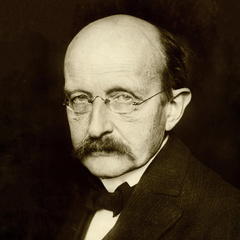
Max Planck
Max Planck, born on April 23, 1858 in Germany, died on October 4, 1947. He was a renowned German physicist and one of the founders of quantum theory, winning the Nobel Prize in Physics in 1918 for his discovery of Planck's constant.
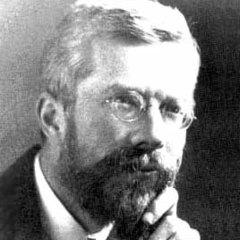
Max Planck, born on April 23, 1858 in Germany, died on October 4, 1947. He was a renowned German physicist and one of the founders of quantum theory, winning the Nobel Prize in Physics in 1918 for his discovery of Planck's constant.
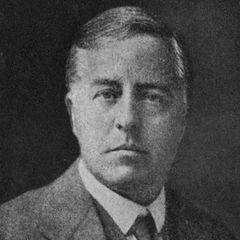
James Jeans was an influential British physicist known for his contributions to astrophysics and cosmology. His research encompassed stellar structure and the origins of the universe, having a profound impact on modern physics.
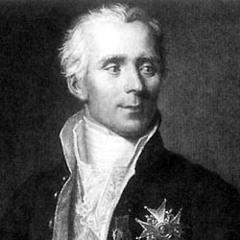
Pierre-Simon Laplace was a renowned French mathematician and astronomer born on March 23, 1749, and died on March 5, 1827. He is considered one of the founders of probability theory and celestial mechanics. Laplace's work in mathematics, astronomy, and probability has had a profound impact on the development of modern science.
George Iles (1852-1942) was a renowned author from the United Kingdom. His works spanned a variety of fields, including history, literature, and philosophy. Iles was known for his in-depth research and attention to detail, and his works have had a profound impact on posterity.
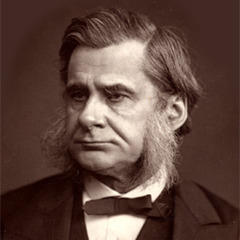
Thomas Huxley, a British biologist, was a staunch supporter of Darwin's theory of evolution. Renowned for his research in comparative anatomy, embryology, paleontology, and philosophy, Huxley made significant contributions to the field of biology. He had a profound influence on science, not only through his support of Darwin's theory of evolution but also through his role as a science popularizer and advocate for science education.
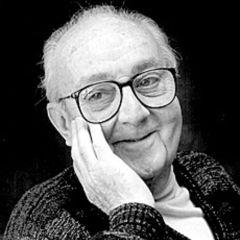
George E. P. Box was an outstanding statistician known for his contributions to statistical modeling, experimental design, and computer science. His work has had a profound impact on modern statistics and data analysis.
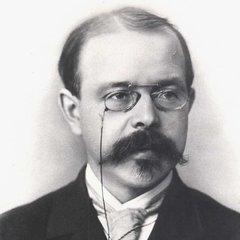
German chemist born on June 25, 1864, and died on November 18, 1941. Walther Nernst made significant contributions to thermodynamics and electrochemistry, particularly in the study of chemical potential and the third law of thermodynamics. His work had a profound impact on the development of chemistry and physics.
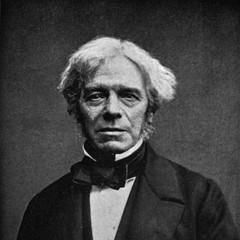
Michael Faraday was an English physicist and chemist, born on September 22, 1791, and died on August 25, 1867. He made significant contributions to the field of electromagnetism, particularly the discovery of electromagnetic induction, which had a profound impact on the development of the electric power industry and electrical engineering.
Anthony Standen was an accomplished British author known for his profound insights into history and culture. His works covered a wide range of historical themes from the Middle Ages to the modern era, celebrated for their unique narrative style and attention to detail.

Elliott Sober is a renowned American philosopher known for his work in the fields of scientific philosophy and epistemology. His research focuses on scientific reasoning, probability interpretation, and philosophical methodology. Born on June 6, 1948, Sober has made significant contributions to the field of philosophy, particularly in scientific philosophy.