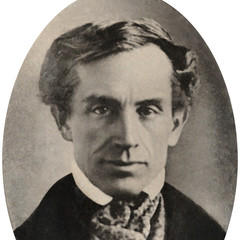
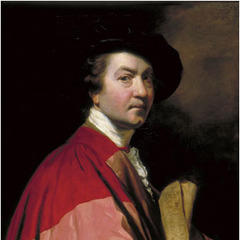
Samuel Morse (April 27, 1791 – April 2, 1872) was an American painter and inventor, best known for inventing the Morse code and the telegraph. Born in Charlestown, Massachusetts, he graduated from Yale University and studied painting in London, becoming a noted portrait and historical painter. In the 1830s, inspired by electromagnetism, he shifted focus to telegraphy. On May 24, 1844, he successfully demonstrated the first telegraph line from Washington, D.C., to Baltimore, sending the message "What hath God wrought." His invention revolutionized long-distance communication, laying the foundation for modern telecommunications. Morse also contributed to the arts, co-founding the National Academy of Design. He is remembered as a pioneer of the communication age.
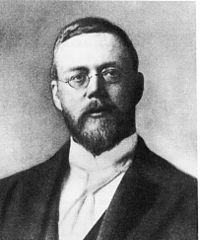
Reginald Fessenden was a prominent inventor who made significant contributions to the field of radio communication. He was born on October 6, 1866, and died on July 22, 1932. Fessenden achieved breakthroughs in wireless power transmission, radio telegraphy, and wireless music transmission.
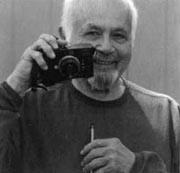
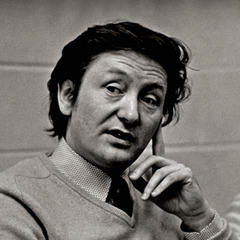
Art Shay is an accomplished photographer renowned for his significant contributions to photojournalism. Born on March 31, 1922, he has captured countless historically significant photographs throughout his career.
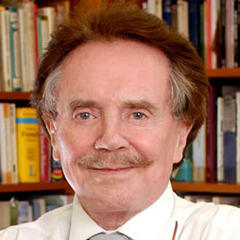
Norman Sherry was a renowned British novelist known for his profound insights into historical figures and events. His works are typically presented in the form of biographies, meticulously depicting the inner worlds and historical contexts of the individuals he portrays.
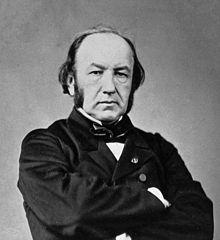
Claude Bernard was a French physiologist born on July 12, 1813, and died on February 10, 1878. He made significant contributions to the field of physiology, particularly in the study of the digestive system and the nervous system.
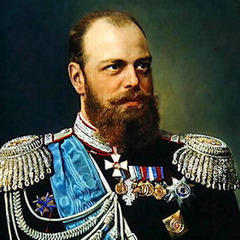
Alexander III, full name Alexander Nikolaevich, was the Emperor of Russia, ruling from 1881 to 1894. He was a conservative who aimed to strengthen central authority and maintain the absolute power of the Tsar. During his reign, Russia underwent several reforms, including the modernization of the railway and postal systems. Alexander III's rule was marked by his efforts to stabilize the country and maintain the status quo. His reign also saw Russia's defeat in the war with Japan, which had a profound impact on the country's political and military systems.
Michael Holroyd is a renowned British biographer known for his in-depth research and vivid storytelling. Born on August 27, 1935, he has been writing since the 1960s and has published numerous biographical works, including biographies of British writers Oscar Wilde and John Boyd Orr.
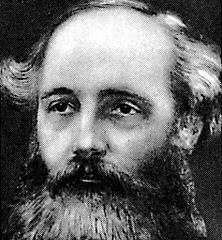
James Clerk Maxwell was an outstanding physicist known for his contributions to the field of electromagnetism. He formulated Maxwell's equations, which describe the properties of electromagnetic fields and predict the existence of electromagnetic waves. Maxwell's work has had a profound impact on modern physics and engineering.
Joshua Reynolds was an influential English painter, recognized for his portraits and landscapes. Born on July 16, 1723, and passing away on February 23, 1792, Reynolds played a significant role in the development of the English portrait school and is often considered the first president of the Royal Academy of Arts.
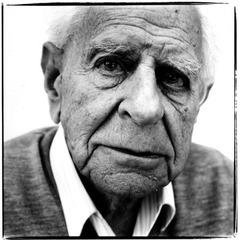
Karl Popper (July 28, 1902 – September 17, 1994) was an influential philosopher known for his work on critical rationalism and falsificationism. He is renowned for his contributions to the philosophy of science, political philosophy, and epistemology, with his ideas having a profound impact on these fields.
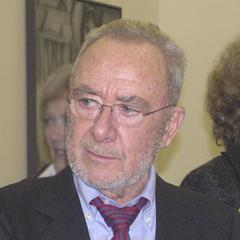
German visual artist known for his unique painting style and diverse creative techniques. Richter's works span a wide range of styles from abstraction to figuration, and his career has spanned over half a century, profoundly influencing contemporary art.