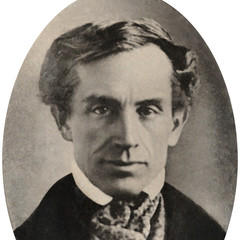
Samuel Morse (April 27, 1791 – April 2, 1872) was an American painter and inventor, best known for inventing the Morse code and the telegraph. Born in Charlestown, Massachusetts, he graduated from Yale University and studied painting in London, becoming a noted portrait and historical painter. In the 1830s, inspired by electromagnetism, he shifted focus to telegraphy. On May 24, 1844, he successfully demonstrated the first telegraph line from Washington, D.C., to Baltimore, sending the message "What hath God wrought." His invention revolutionized long-distance communication, laying the foundation for modern telecommunications. Morse also contributed to the arts, co-founding the National Academy of Design. He is remembered as a pioneer of the communication age.
George Iles (1852-1942) was a renowned author from the United Kingdom. His works spanned a variety of fields, including history, literature, and philosophy. Iles was known for his in-depth research and attention to detail, and his works have had a profound impact on posterity.
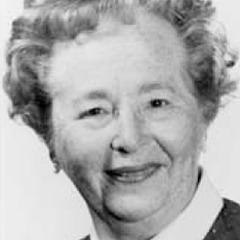
Gertrude B. Elion was an outstanding innovator known for her contributions to the field of drug chemistry. Born on January 23, 1918, and passing away on February 21, 1999, Elion's work in drug development, particularly in the research of antiviral and anticancer drugs, had a profound impact on medical progress.
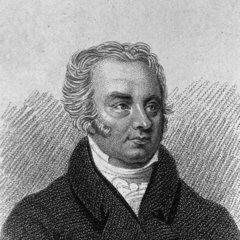
Astley Cooper was a renowned British surgeon born on August 23, 1768, and died on February 12, 1841. He is known for his contributions to the fields of anatomy and surgery, particularly in otolaryngology and ophthalmology.
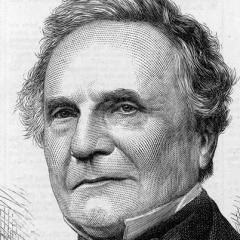
Charles Babbage, born on December 26, 1791 and died on October 18, 1871, was a renowned British mathematician, inventor, and engineer, often referred to as the 'father of computers'. He made significant contributions in the fields of mathematics, astronomy, and mechanical engineering, and his designs of the Difference Engine and the Analytical Engine laid the foundation for the development of computer science.
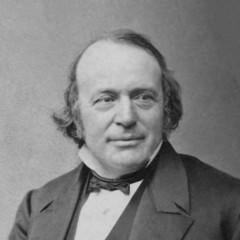
Louis Agassiz, born on May 28, 1807 in Switzerland and died on December 14, 1873 in the United States, was a renowned geologist in the 19th century. He made significant contributions to the fields of paleontology and geology.
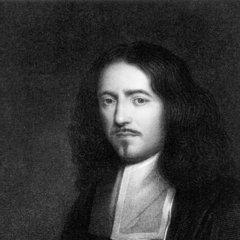
Marcello Malpighi was an Italian physician and scientist, renowned for his substantial contributions to anatomy and histology. Often hailed as the father of microscopic anatomy, he made numerous discoveries using the newly invented microscope. Malpighi's work laid the groundwork for modern histology, and his detailed studies of the body's structures and functions have had a lasting impact on medical science.
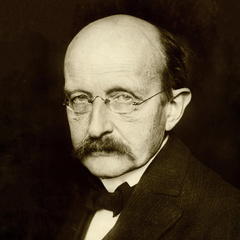
Max Planck, born on April 23, 1858 in Germany, died on October 4, 1947. He was a renowned German physicist and one of the founders of quantum theory, winning the Nobel Prize in Physics in 1918 for his discovery of Planck's constant.
William Wilson Morgan was an American astronomer born on January 3, 1906, and passed away on June 21, 1994. He was known for his research in astrophysics, particularly in the field of stellar evolution and cosmic structure.
Anthony Standen was an accomplished British author known for his profound insights into history and culture. His works covered a wide range of historical themes from the Middle Ages to the modern era, celebrated for their unique narrative style and attention to detail.
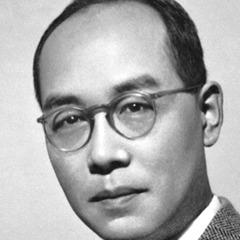
Hideki Yukawa was a prominent physicist born on January 23, 1907, in Japan. He made significant contributions to the field of particle physics, particularly with his proposal of the meson hypothesis, which predicted the existence of mesons and had a profound impact on the development of particle physics.