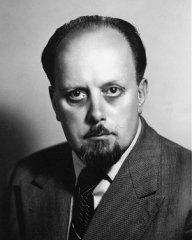
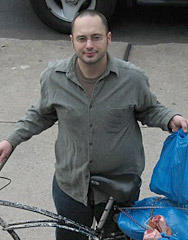
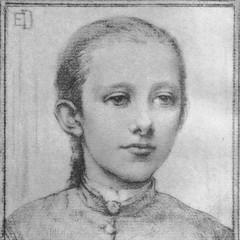
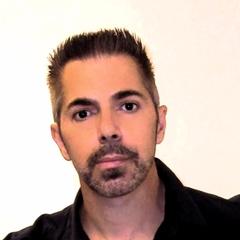
Vladimir Bartol (February 24, 1903 – September 12, 1967) was a Slovenian writer, playwright, and essayist, best known for his dystopian novel Alamut. Born in Ljubljana, he studied biology and philosophy at the University of Ljubljana and later in Paris. His works explore themes of power, faith, and individual freedom, influenced by Nietzsche and Freud. Alamut, published in 1938, is set in an 11th-century Persian fortress and tells the story of a leader who manipulates followers through drugs and fear, often seen as an allegory of totalitarianism. Bartol also wrote plays and short stories but gained little recognition during his lifetime. After WWII, he focused on scientific writing. Today, he is celebrated as a key figure in Slovenian literature, with Alamut translated into many languages.
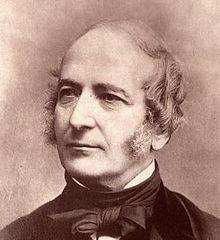
John Scott Russell was a British engineer known for his contributions to the field of fluid mechanics. His most notable achievement was the invention of the hydrographic soundings machine, and he gained recognition in the scientific community for his research on wave propagation.
Max Rubin, born in 1916, is an accomplished author known for his works across various literary genres. His writing is celebrated for its profound insights and unique narrative style.
Camillo Berneri was an Italian political activist and writer, born on May 28, 1897, and died on May 5, 1937. He was an anarchist and a Marxist, involved in political activities in Italy and Spain. Berneri was active on the Italian political stage in the early 20th century and later traveled to Spain to participate in the Spanish Civil War. His thoughts and actions had an impact on subsequent political movements.
Alan Watts was a British philosopher, writer, and speaker known for his exploration of the relationship between Eastern and Western thought, particularly focusing on Zen Buddhism and its influence on Western culture. His work has influenced many in the areas of spirituality, psychology, and the philosophy of science.
Neil deGrasse Tyson is an American astrophysicist, science communicator, and television personality. Born on October 5, 1958, he is renowned for his deep understanding of the cosmos and his ability to popularize scientific knowledge. Tyson grew up in New York City and earned a Ph.D. in astronomy from Columbia University. He served as the director of the Hayden Planetarium at the American Museum of Natural History and has been a member of various scientific committees.
Stephen Hawking was a renowned British theoretical physicist known for his contributions to the fields of black hole theory and cosmology. Born on January 8, 1942, he overcame the challenges of ALS to become a global icon of science and perseverance.
Fatema Mernissi was a Moroccan writer and academic, recognized for her contributions to the fields of women's rights and Islamic feminism. Born in 1940 and passing away on November 30, 2015, Mernissi dedicated her life to advocating for gender equality and challenging traditional gender roles in Moroccan society. Her writings often centered on the experiences of women in the Middle East and North Africa, making her a prominent voice in the global conversation on women's rights.
Peter Moskos is an influential figure in the field of [Identity Positioning]. Born in 1971, he has a rich [Biography Experience]. In terms of [Achievements and Contributions], he is renowned for [Specific Achievements]. Regarding [Impact and Evaluation], Peter Moskos is considered to be [Evaluation].
Margaret Barber, a British writer born on May 7, 1869, and died on August 24, 1901. Her works are known for their delicate emotions and profound insights, which have had a profound impact on literature.
Robert Lanza is an American scientist renowned for his work in stem cell research and regenerative medicine. He has a deep background in cellular and molecular biology and has published numerous academic papers in these fields.