Quotessence
Home / Quotes / Quote by George Eliot

Quote by George Eliot

Work

Daniel Deronda

Daniel Deronda is a complex narrative that intertwines the lives of its characters with the broader social and political context of the time. The story follows Daniel, a young man raised by a Jewish family, as he navigates his identity and relationships amidst the backdrop of the British Empire's expansion and the rise of Zionism. more
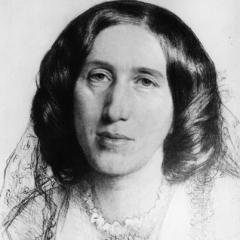
Author

George Eliot
George Eliot

George Eliot, born Mary Ann Evans, was a renowned 19th-century British novelist. Her works are known for their profound psychological insights and critical exploration of social issues. With her unique narrative techniques and rich emotional expression, she has had a profound impact on literature. more

You May Also Like

“Consequences are unpitying. Our deeds carry their terrible consequences, quite apart from any fluctuations that went before—consequences that are hardly ever confined to ourselves. And it is best to fix our minds on that certainty, instead of considering what may be the elements of excuse for us.”

“But I think it is hardly an argument against a man's general strength of character, that he should be apt to be mastered by love. A fine constitution doesn't insure one against small-pox or any other of those inevitable diseases. A man may be very firm in other matters, and yet be under a sort of witchery from a woman.”

“Ah! but the moods lie in his nature, my boy, just as much as his reflections did, and more. A man can never do anything at variance with his own nature. He carries within him the germ of his most exceptional action; and if we wise people make eminent fools of ourselves on any particular occasion, we must endure the legitimate conclusion that we carry a few grains of folly to our ounce of wisdom.”

“A newspaper, as I'm sure you know, is a collection of supposedly true stories written down by writers who either saw them happen or talked to people who did. These writers are called journalists, and like telephone operators, butchers, ballerinas, and people who clean up after horses, journalists can sometimes make mistakes.”

“Truth that is naked is the most beautiful, and the simpler its expression the deeper is the impression it makes; this is partly because it gets unobstructed hold of the hearer’s mind without his being distracted by secondary thoughts, and partly because he feels that here he is not being corrupted or deceived by the arts of rhetoric, but that the whole effect is got from the thing itself.”

“It is the courage to make a clean breast of it in the face of every question that makes the philosopher. He must be like Sophocles' Oedipus, who, seeking enlightenment concerning his terrible fate, pursues his indefatigable inquiry even though he divines that appalling horror awaits him in the answer. But most of us carry with us the Jocasta in our hearts, who begs Oedipus, for God's sake, not to inquire further.”