“Saying Good-bye to the God of Disease (1) Mauve waters and green mountains are nothing when the great ancient doctor Hua To could not defeat a tiny worm. A thousand villages collapsed, were choked with weeds, men were lost arrows. Ghosts sang in the doorway of a few desolate houses. Yet now in a day we leap around the earth or explore a thousand Milky Ways. And if the cowherd who lives on a star asks about the god of plagues, tell him, happy or sad, the god is gone, washed away in the waters. July 1, 1958”
Quote by Mao Zedong
Work
The Poems of Mao Zedong
This book compiles a selection of poems authored by Mao Zedong, the former leader of the People's Republic of China. The poems delve into the political and social context of the time, reflecting Mao's vision for China's future and his role in the Communist revolution. more
Author
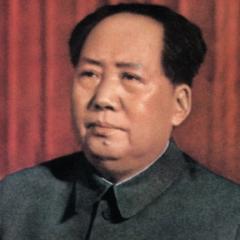
Mao Zedong
Mao Zedong, born on December 26, 1893, in Xiangtan County, Hunan Province, and died on September 9, 1976. He was one of the founders of the Communist Party of China and served as the Chairman of the People's Republic of China. Mao played a significant role in the history of China's revolution and construction, proposing many theories and practices with profound influence. more
You May Also Like
Source: Thoughts for Every-day Living from the Spoken and Written Words of Maltbie Davenport Babcock
“Living and dreaming are two different things - but you can't do one without the other.”
“We each shape our own life, and the shape of it is determined largely by our attitude.”
“People will say a movie bombed at the box office but I couldn't care less.”
Source: The Art of LIVING LONG