Quotessence
Home / Quotes / Quote by Jamie Dimon

Quote by Jamie Dimon

“People thought they were going to make a lot of money. And then at one point, it got too hot, and the government wanted to knock it down. Trying to get it up and then knock it down, both were a mistake. And part of the reason, some people think, is that they wanted to equitize some of their companies. A healthy stock market helps equitize companies and reduce the country's debt burden.”

Quote by Jamie Dimon

Author
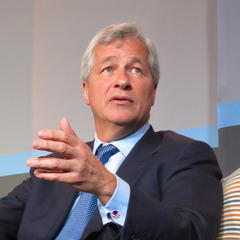
Jamie Dimon
Jamie Dimon

Jamie Dimon is an accomplished businessperson currently serving as the Chairman and CEO of JPMorgan Chase & Co. Since 1995, Dimon has held various key positions at JPMorgan Chase, becoming CEO in 2005. Under his leadership, the bank has achieved significant performance growth and emerged as one of the most influential financial institutions globally. more

You May Also Like

“They have a policy in China for their big companies called "Go abroad." It's a rational thing for both the company and the country to say, "We want big, successful companies." Particularly in areas where they need it: agriculture, energy, technology. I think banking, too. One or two have bought a trading house. Some have already begun expanding around the world. Of course they're going to have those ambitions. Why wouldn't they? They're just doing it methodically. It's a logical strategy and, well-executed, they will succeed.”

“My guess is the big Chinese banks will be in 100 countries by then. They will have very sophisticated operations, and they may very well have bought banks around the world in countries that allow it. I mean, I don't think the American government would allow them to buy JPMorgan. But they will be able to buy a sizable big bank in the U.S. at some point. Whether they do or not, or if it's allowed or not, I don't know.”

“At Travelers, we were much more opportunistic. It was very successful, but it wasn't an integrated financial services company. We had a property casualty company, a life company, a brokerage company. We were a financial conglomerate. It wasn't a unified, coordinated strategy of any sort. When it merged with Citi, that became a big issue; Citi, at that time, wasn't yet a fully integrated, coordinated company.”