“The Red Army is like a furnace in which all captured soldiers are melted down and transformed the moment they come over.”
Quote by Mao Zedong
Work
Mao's Road to Power: From the Jinggangshan to the establishment of the Jiangxi Soviets, July 1927-December 1930
This book compiles historical documents and materials related to Mao Zedong's leadership during the formative years of the Chinese communist movement. The collection covers the period from July 1927 through December 1930, a time when revolutionary forces were establishing rural base areas following the failure of urban uprisings. The materials document the strategies, policies, and theoretical developments that emerged during the Jinggangshan campaign and the establishment of the Jiangxi Soviet zone. The volume provides primary source materials that reflect the political and military approaches that would later shape communist strategy in China. This documentary collection serves as a resource for understanding the early ideological and practical foundations of the Chinese revolutionary movement during a critical transitional phase. more
Author
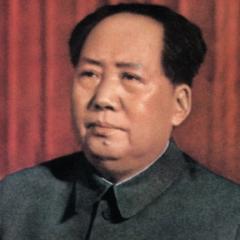
Mao Zedong
Mao Zedong, born on December 26, 1893, in Xiangtan County, Hunan Province, and died on September 9, 1976. He was one of the founders of the Communist Party of China and served as the Chairman of the People's Republic of China. Mao played a significant role in the history of China's revolution and construction, proposing many theories and practices with profound influence. more
You May Also Like
“The arrow of Marxist-Leninism must be used to hit the target of the Chinese Revolution.”
Source: My Russian Grandmother and Her American Vacuum Cleaner: A Family Memoir
“Why is autobiography the most popular form of fiction for modern readers?”
Source: When Memory Speaks: Exploring the Art of Autobiography
“It is not my deeds that I write down, it is myself, my essence.”
Source: Complete Essays
“Sick of being a prisoner of my childhood, I want to put it behind me.”
Source: The Complete Unreliable Memoirs