Quotessence
Home / Quotes / Quote by Noam Chomsky

Quote by Noam Chomsky

“If something is right (or wrong) for us, it’s right (or wrong) for others. It follows that if it’s wrong for Cuba, Nicaragua, Haiti, and a long list of others to bomb Washington and New York, then it’s wrong for Rumsfeld to bomb Afghanistan (on much flimsier pretexts), and he should be brought before war crimes trials.”

Quote by Noam Chomsky

Author
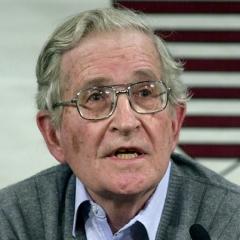
Noam Chomsky
Noam Chomsky

Noam Chomsky, born on December 7, 1928, is a renowned linguist from the United States. His research in generative grammar and transformational grammar has had a profound impact on modern linguistics. Chomsky's academic achievements extend beyond linguistics, as he is also an active political commentator and philosopher, known for his unique perspective and profound insights. more

You May Also Like

“As long as people are marginalized and distracted [they] have no way to organize or articulate their sentiments, or even know that others have these sentiments. People assume that they are the only people with a crazy idea in their heads. They never hear it from anywhere else. Nobody's supposed to think that. ... Since there's no way to get together with other people who share or reinforce that view and help you articulate it, you feel like an oddity, an oddball. So you just stay on the side and you don't pay any attention to what's going on. You look at something else, like the Superbowl.”

“There is no reason to accept the doctrines crafted to sustain power and privilege, or to believe that we are constrained by mysterious and unknown social laws. These are simply decisions made within institutions that are subject to human will and that must face the test of legitimacy. And if they do not meet the test, they can be replaced by other institutions that are more free and more just, as has happened often in the past.”

“As for the various religions, there's no doubt that they are very meaningful to adherents, and allow them to delude themselves into thinking there is some meaning to their lives beyond what we agree is the case. I'd never try to talk them out of the delusions, which are necessary for them to live a life that makes some sense to them. These beliefs can provide a framework for deeds that are noble or savage, and anywhere in between, and there's every reason to focus attention on the deeds and the background for them, to the extent that we can grasp it.”

“Prophet just means intellectual. They were people giving geopolitical analysis, moral lessons, that sort of thing. We call them intellectuals today. There were the people we honor as prophets, there were the people we condemn as false prophets. But if you look at the biblical record, at the time, it was the other way around. The flatterers of the Court of King Ahab were the ones who were honored. The ones we call prophets were driven into the desert and imprisoned.”