Quotessence
Home / Quotes / Quote by Orson Scott Card

Quote by Orson Scott Card

“It’s there in your own Bible, Carlotta. Two trees—knowledge and life. You eat of the tree of knowledge, and you will surely die. You eat of the tree of life, and you remain a child in the garden forever, undying.”

Quote by Orson Scott Card

Work

Ender's Shadow

This novel is a sequel to 'Ender's Game' and follows the story of a young soldier named Bean, who is part of a military training program. The narrative delves into the psychological effects of combat and the moral complexities of warfare, offering a critical perspective on the use of children in military conflicts. more
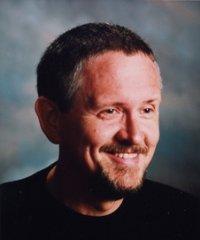
Author

Orson Scott Card
Orson Scott Card

Orson Scott Card, born on August 24, 1951, is a renowned science fiction novelist from the United States. His works are known for their profound philosophical insights and rich imagination, with 'Ender's Game' series being particularly famous and influential in the science fiction genre. more

You May Also Like

“Even though prayers are not offered only to get a desired result, there is little doubt that most miracles are the result of prayer. God wants us to pray to him and ask him for things, just as any loving father and mother want their children to come to them with whatever is on their minds. But if our focus is solely on getting the outcome we want, the prayer will fail, precisely because our belief is placed in the wrong place. It’s a great irony. If all we care about is the result, then we are effectively making that result our God, rather than God himself. So if we are praying to our “God”—the God of results—rather than to God himself, then we are praying to a “God” who is not God, and who is therefore powerless to help us.”

“But does contemptus mean 'contempt,' dear? Of course not. That would imply arrogance, superiority, pride. So much that we call worldly is actually just flawed or being seen through a cracked lens. Imperfect or imperfectly understood. Who are we to judge as contemptible a thing or person whose existence God sustains? Everything, however imperfect, has its purpose. No, Tony dear, contemptus mundi means 'detachment from the world,' seeing the world sub specie aeternitatis. Enduring or celebrating it, but never forgetting—even when it seems perfect and forever—that as the Bible says: 'all this shall pass like grass before the wind.”

“Prayer is a law of the universe. As God has ordained that certain physical laws should govern the law of this universe, so He has ordained the spiritual law. Books simply will not stay put on the table without the operation of gravity - although God could cause them, by divine fiat, to stay. Certain things simply will not happen without the operation of prayer, although God could cause them, by divine fiat, to happen. The Bible is full o examples of people doing what they could do and asking God to do what they couldn't do. In other words, the pattern given to us is both to work and pray.”

“I admire the way the Bible defies anybody who wants to nail it on a preferred meaning. There are so many ways to interpret the Bible as there are different opinions about what a certain passage or verse really means. So anybody can go there and read a meaning into (eigesis) whatever passage or verse he wants to suit his inclinations. Proof that the Bible is inspired? It caters for all sorts of people and views.”

“The author of the hymn 'Amazing Grace', John Newton, who once was a slave ship captain, and who became a Christian preacher and an enemy of the slave trade, once said: 'I have reason to praise [God] for my trials, for, most probably, I should have been ruined without them.' The author of The Gulag Archipelago , Aleksandr Solzhenitsyn, who suffered for twenty years in the hellish prison camps he describes in that book, wrote: 'Bless you prison, bless you for being in my life. For there, lying upon the rotting prison straw, I came to realize that the object of life is not prosperity as we are made to believe, but the maturity of the human soul.' This does not mean that Newton would have chosen to go through his trials, or that Solzhenitsyn in any way enjoyed the terrible suffering of his imprisonment. But it means that in retrospect they can see that God used those difficulties to bless them in the long run.”

“Praying to God involves both us and God. God wants us to participate in what he is doing, and for sure one of the main ways we participate in what he is doing is by prayer. We can also participate in what he is doing by feeding the hungry and helping the poor and caring for the sick and giving of our resources to those who have little. God wants us to partner with him. So there is a paradox at work, and a mystery. On the one hand, the Bible says that apart from God we can do nothing. And yet, on the other hand, God invites us to do some things with him. This is at the heart of the mystery of prayer. God wants us to use our faith and to pray. But we can focus so much on the importance of our faith and our prayers that we forget about God and think it is our faith and our prayers that perform the miracle, rather than the God to whom we pray and in whom we have faith as we pray.”