Quotessence
Home / Quotes / Quote by Hailee Steinfeld

Quote by Hailee Steinfeld

“I could be inspired by something I see or something I hear and write down or send to a friend or a writer or whether I have instrumental tracks or just a couple chords recorded on my phone. If I have a couple sessions set, I'll go into the studio with the people I'm lucky enough to call my friends because I feel like I can talk to them and then suddenly our conversations turn into these songs you hear on the radio. I still don't understand how it happens but I talk about my experiences and my situations and everything and then they turn into these amazing pop songs.”

Quote by Hailee Steinfeld

Author
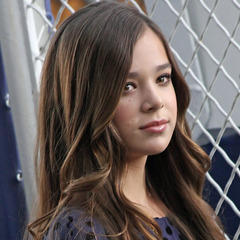
Hailee Steinfeld
Hailee Steinfeld

Hailee Steinfeld, born on December 11, 1996, is an American actress. She gained widespread acclaim for her role as Hiro Hamada in the film 'Big Hero 6', for which she was nominated for an Academy Award for Best Supporting Actress. She has also been praised for her performances in television series such as 'Hannibal' and 'American Crime Story'. more

You May Also Like

“I just think giving back is in tandem with the way in which I was raised, with the, 'It takes a village to raise a child' mentality. Sometimes with the knowledge you have, you just don't know how powerful it is. I think I'm in a reasonably interesting position to recognise that. Plus we're now living in a completely different time to the one in which I grew up in. Because of my peers as well, it's the whole reason I'm doing what I'm doing. In terms of putting things back into the community, it's almost like running my sound system again.”

“I'm pretty faithful to one fragrance, but I go through phases. It's more about times and moods than moments in the week. In my life, I don't really have a Saturday and Sunday - you might get days off in the middle of the week and work on the weekend. I wear Roberto Cavalli all the time now. Fragrance is an extension of yourself, you need to feel like it's part of you and you can wear it in any situation and it just represents you, any time of the day, any time of the week, any time of the month.”

“There are fewer media writers in traditional settings. That is a beat that many legacy brands cannot afford. On the other hand technology writers are writing about media in ways they didn't before. As a consequence of the shift, there is less interest in many ways in the activities at some media. If you look at coverage of media as whole, the decision-making at the three broadcast networks and the cable channels, for instance, is much less of a focus than it once was. The guts of what goes on at Fox or CNN or MSNBC probably has less impact than it once did. It certainly gets less attention.”

“There is more interest in what is occurring in technology companies that impact news. Such companies don't have the same sense of transparency about what they do. They have a tradition of secrecy about products, mores and decision-making that goes along with Silicon Valley and intellectual property and technology. You cannot step onto the grounds of Google without signing a Non-Disclosure Agreement. That industrial secrecy mentality exists along with a theoretical sensibility about transparency on the Web, which is different than transparency inside companies that profit from the Web.”

“ll industries have been disrupted and disruption tends to generate gatherings for people to share information. I don't think media are unusual here. Add to that the discovery, or perhaps expansion of the awareness, that events can generate revenue. So now we have companies whose business model is heavily based on events, whether it is Re/code or South by Southwest or many others. Those kinds of gatherings were once more institutionally oriented inside trade associations. Now they have been expanded out.”

“Everyone is on Facebook and age is not a determinant of whether a reporter is using Twitter as part of their newsgathering and marketing. Some of the transition is about money at this point - hiring younger reporters is cheaper. Often these reporters are more digitally savvy. But there are plenty of 50-plus journalists employers can find now who are excited about technology, not threatened. It is no longer an either/or proposition.”