“For, until the wisdom of men bear some proportion to the wisdom of God, their attempts to find out the structure of his works, by the force of their wit and genius, will be vain.”
Quote by Thomas Reid
Work
Essays on the powers of the human mind: An essay on quantity. An analysis of Aristotl's logic
The text examines the potential and limitations of human thought, providing an in-depth examination of Aristotle's logical theories. more
Author
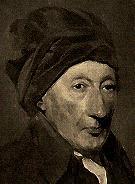
Thomas Reid
Thomas Reid (April 26, 1710 – October 7, 1796) was a Scottish philosopher and a key figure of the Scottish Enlightenment. He founded the Scottish School of Common Sense, which sought to counter David Hume's skepticism by grounding philosophy in intuitive principles of common sense. Reid studied and taught at the University of Aberdeen, later becoming Professor of Moral Philosophy at the University of Glasgow. His major works, An Inquiry into the Human Mind on the Principles of Common Sense and Essays on the Intellectual Powers of Man, argued that perception directly grasps external objects, rejecting the theory of ideas. His ideas influenced 19th-century Scottish philosophy, French spiritualism, and 20th-century analytic philosophy. more
You May Also Like
Source: Philosophical works
Source: The Works of Thomas Reid; with an Account of His Life and Writings
Source: Philosophical works
Source: Philosophical works
Source: Philosophical works
Source: The Story of My Life: Recollections and Reflections
Source: How Did I Get Here?: Finding Your Way to Renewed Hope and Happiness When Life and Love Take Unexpected Turns