Quotessence
Home / Quotes / Quote by Louisa Lawson

Quote by Louisa Lawson

Author

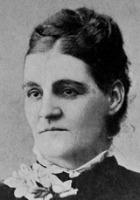
Louisa Lawson
Louisa Lawson

Louisa Lawson was an Australian poet who made significant contributions to the literary scene in the late 19th and early 20th centuries. Born on February 17, 1848, and passing away on August 12, 1920, Lawson's poetry was characterized by its emotional depth and its vivid portrayal of the Australian landscape. She was a pioneer in the Australian literary world, known for her romantic and personal style that resonated with both readers and critics. more

You May Also Like

“For me the breakthrough was the realization that I wasn't the center of the universe or even the centre of my own world. That you and your work, your living, are not the only reason you're here. Your role is to shepherd your children through to adulthood. That's the point of life. Your own little sessions and needs and passions are just there to flavour you and help you do that job for your children.”

“If your body is crying out for a change, or crying out that it's unhappy, for goodness sake listen to it. Our bodies aren't machines that get by with a grease and oil change every 50,000 kilometres. Stress is part of life but if prolonged stress is in our life, we have to ask ourselves if we are in the right place, right frame of mind, or doing the right job.”

“And there is this fact of the twelve baskets: why twelve? What does it mean? Twelve is the number of the tribes of Israel, symbolically it represents all the people. And this tells us that when food is shared equally, with solidarity, nobody is devoid of the necessary, each community can meet the needs of the poorest. Human ecology and environmental ecology go hand in hand.”

“Drama is the most difficult of all arts. In it two things are to be satisfied - first, the ears, and second, the eyes. To paint a scene, if one thing be painted, it is easy enough; but to paint different things and yet to keep up the central interest is very difficult. Another difficult thing is stage - management, that is, combining different things in such a manner as to keep the central interest intact.”