Quotessence
Home / Quotes / Quote by Phoebe Gloeckner

Quote by Phoebe Gloeckner

“Comics are a "young" art form, and there is much confusion as to how to treat them. Images have more immediate impact than words, and it is not every reader who can be convinced to relax into experiencing the work for what it is - not words and pictures, but a different form, where the narrative is propelled by the blending of image, word and sequence, and where no element can be extricated and have the same meaning by itself. When this art is shown in a gallery, its "thingness" is called to attention, it is no longer experienced as "story," but rather as an artifact of the artist's process.”

Quote by Phoebe Gloeckner

Author
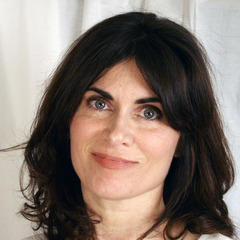
Phoebe Gloeckner
Phoebe Gloeckner

Phoebe Gloeckner is an American cartoonist known for her unique style and profound psychological portrayals. Her work often focuses on female experiences and identity, as well as critical reflections on social issues. more

You May Also Like

“Whatever they are, can Comics be "Art"? Of course they can. The "Art" in a piece is something independent of genre, form, or material. My feeling is that most paintings, most films, most music, most literature and, indeed, most comics fail as "Art." A masterpiece in any genre, form or material is equally "good." It's ridiculous to impose a hierarchy of value on art. The division between high and low art is one that cannot be defended because it has no correlation to aesthetic response.”

“Most comics are not truly rebellious or creatively free. Most comics, paintings, music, etc., are derivative of other, more successful works. And it's quite often that those without much rebellious spirit are the ones to imitate it. Genuine radical expression is hard to come by, but it usually crops up when money is not a motivating factor. You can take all the liberties you want when someone else's dime is not at stake. The validation is not a threat to comics. A far greater threat to the creative freedom of artists working in any medium is self-consciousness and self-censorship.”

“I spend quite a bit of time thinking about my students. I look at them, at their work, I listen to what they tell me, and try to figure out who they might become in the best of all possible worlds. This is not easy. Students try to give you clues; sometimes they look at you as if imploring you to understand something about them that they don't yet have the means to articulate. How can one succeed at this? And how can one do it 20 times over for all the students in a class? It's impossible, of course. I know this, but I try anyway. It's tiring.”

“I don't think it's possible to teach a person to be an artist. But yet, I'm here, and I suppose this is what I'm expected to do. I teach a course called graphic narrative and one called digital studios, but no matter the topic, the basic principle underlying my "method" of teaching is that a properly prepared artist/creator must simply know everything. Not just how to draw, but how to see. Not just how to use a computer program, but what the word "penultimate" means. And the shape and orientation of a goat's pupil. And where Kentucky and Chile are, at least approximately.”

“I'd describe my inner life as constantly vigilant, always ready to flee or respond with violence. I've felt this way since I was a small child. Although it's often quite amusing, it's exhausting at times to live with myself, and when I'm tired and overwhelmed, I do become very depressed. If I'm unable to work for too long, I start questioning my purpose on this earth and whether or not I deserve to live. When I look at other people, I get the sense that they live with themselves much more gracefully.”

“I'm not trying to create a stand-in or avatar with whom the reader can identify, but separate, believable characters with distinct personalities; I'm trying to place the reader more in the role of observer rather than that of participant. I think this approach comes out of my own personal desire and struggle to understand our world, and the complex interactions of people with one another and their environment. My work is an improvised exploration of this complexity, as opposed to a structured, plot-driven narrative.”

“I try to be as faithful as possible to the facts as I understand them, but any story is at least partly a product of the imagination. I can comprehend a lot by immersing myself in all of the information I've collected, but my imagination is what brings it to life, and the bridging of that gap - between the received history and the conceived fiction - is both the most difficult and most enjoyable part of the process for me.”