Quotessence
Home / Quotes / Quote by Fred Willard

Quote by Fred Willard

“I have friends who will say, "Oh you gotta come and see our show." And the first thing I say is, "Is it sketch or improv?" I'll go in a minute to see a sketch show. I love sketch; it's my favorite form. But if it's all improv, they're either very good and it's annoying how good they are and it makes you feel bad, or they're not too good then you're sweating for them. And you don't want to sweat for them, see actors repeating each other's lines.”

Quote by Fred Willard

Author
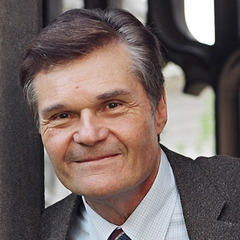
Fred Willard
Fred Willard

Fred Willard, born on September 18, 1939, is an American actor with a rich career in film and television, known for his unique sense of humor and acting skills. more

You May Also Like

“I'll look through a script, and if there's a lot of night shooting I tend not to want to do it. If there's huge party scenes and I'll go through a few pages and say "Well, at least I'm not in this," then the last page my character walks in and says something, I say, "Uh oh, that's going to be three days on the set sitting around drinking coffee at the craft-service table." Unless it's a great part. All in all if it's a great part you'll do it and I'll say, "Well, I'm gonna be on the set for three days."”

“Acting is different from dance. The black-and-whiteness of dancing is mostly about the technical form - like, this is how people have been doing it for millions of years. You can't let down those ballerinas who died a long time ago. My teacher will say, "This person would be ashamed!" And it's like, oh God. But with acting, it's different because people like something fresh. You can mix it up and create your own thing and it's not necessarily wrong.”

“I did Lois & Clark: The New Adventures Of Superman. It was a sequence where the president got captured and they made a doppelgänger of the president who was kind of goofy. They were Second City people who were the producers and writers, and they told my agent, "Well, we know Fred can do the kind of goofy, but we're not sure he can do be the straight president, kind of the Clinton-esque." So I really got my back up and I called my agent and I said, "Goddammit, I insist that I go in and read." And I did a great job and I got the part.”

“We've continued progress in the six months since Trump got elected, and the good thing about what we're doing is that success begets success. As we bring down greenhouse gases, for example, we've closed half of the coal-fired power plants in the country in recent years. There's more impetus to try to close the other half because you can see that it is working. So, you know, I had hoped that Trump would not do that, and it doesn't make any sense to me, but regardless, it is not as cataclysmic as it could be.”

“Fifty percent of the world's population lives in cities. In a couple of decades, 70 percent of the world's population will be living in cities. Cities are where the problem is. Cities are where the solution is, where creativity exists to address the challenges and where they have most impact. This is why, in 2005, the C40 was founded, an organization of cities that address climate change. It started with 18 cities; now it's 91. Cities simply are the key to saving the planet.”

“Other ways of looking at the environmental or climate change stuff is to frame it in the context that it is simultaneously a public health issue. One out of eight premature deaths worldwide happens because of air pollution. The worst power plant in America kills 278 people a year and causes 445 heart attacks. So, when we improve air quality we improve our lives, and at the same time we improve the climate as well. We must see climate policy from this perspective and not as an abstract threat that may threaten our survival in 100 years.”

“People vote against their own interests that all the time. But when you do the polling in the U.S., it has gone from less than 50 percent who thought climate change was real to 70-odd percent. And if you listen to the Republicans in Congress, they used to say, "Oh, climate change doesn't exist." Then they switched to "Well, it exists, but it's not man-made," to "Well, I'm going to address the issue." Why? Because when they go home, the local constituent says, "Wait a second. What are you talking about? We just had a flood. We haven't had rain in a long time." They can't get away from it.”