Quotessence
Home / Quotes / Quote by James Madison

Quote by James Madison

Work

James Madison's

This book delves into the life and contributions of James Madison, focusing on his role in drafting the United States Constitution and his influence on American political thought. It examines his early life, education, and political career, providing insight into his ideas on federalism, separation of powers, and the role of the judiciary. more
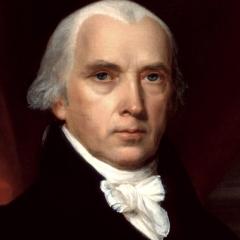
Author

James Madison
James Madison

James Madison, the 4th President of the United States, was born on March 16, 1751, and died on June 28, 1836. He was a key figure in drafting the U.S. Constitution and had a profound impact on the political system of the United States. more

You May Also Like

“When indeed Religion is kindled into enthusiasm, its force like that of other passions is increased by the sympathy of a multitude. But enthusiasm is only a temporary state of Religion, and whilst it lasts will hardly be seen with pleasure at the helm. Even in its coolest state, it has been much oftener a motive to oppression than a restraint from it.”

“A zeal for different opinions concerning religion...[has] divided mankind into parties, inflamed them with mutual animosity, and rendered them much more disposed to vex and oppress each other than to co-operate for their common good.”

“The civil Government, though bereft of every thing like an associated hierarchy, possesses the requisite stability, and performs its functions with complete success; whilst the number, the industry, and the morality of the Priesthood, and the devotion of the people, have been manifestly increased by the total separation of the church from the State.”

“The study of theology, as it stands in Christian churches, is the study of nothing; it is founded on nothing; it rests on no principles; it proceeds by no authorities; it has no data; it can demonstrate nothing; and it admits of no conclusion.”

“The prejudice of unfounded belief often degenerates into the prejudice of custom, and becomes at last rank hypocrisy. When men, from custom or fashion or any worldly motive, profess or pretend to believe what they do not believe, nor can give any reason for believing, they unship the helm of their morality, and being no longer honest to their own minds they feel no moral difficulty in being unjust to others.”

“I am for liberty of conscience in its noblest, broadest, and highest sense. But I cannot give liberty of conscience to the pope and his followers, the papists, so long as they tell me, through all their councils, theologians, and canon laws that their conscience orders them to burn my wife, strangle my children, and cut my throat when they find their opportunity.”