“In the application of Satyagraha, I discovered, in the earliest stages, that pursuit of Truth did not admit of violence being inflicted on one's opponent, but that he must be weaned from error by patience and sympathy. For, what appears to be truth to the one may appear to be error to the other. And patience means self-suffering. So the doctrine came to mean vindication of Truth, not by infliction of suffering on the opponent but one's own self.”
Quote by Mahatma Gandhi
Work
Gandhi: Selected Political Writings
Gandhi: Selected Political Writings is a compilation of essays and speeches by Mahatma Gandhi, focusing on his political philosophy and strategies for India's independence movement. The book includes his insights on non-violence, civil disobedience, and social justice, offering a comprehensive view of Gandhi's political thought and its impact on the Indian struggle for freedom. more
Author
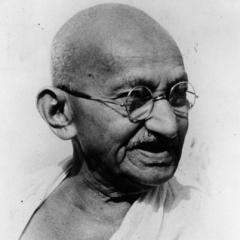
Mahatma Gandhi
A leader of the Indian independence movement, lawyer, politician, and social activist, Mahatma Gandhi is revered as the 'Father of the Nation'. He advocated for non-violence and unity between Hindus and Muslims, leading the Indian struggle for independence and profoundly influencing history both in India and around the world. more
You May Also Like
Source: The Way to God: Selected Writings from Mahatma Gandhi
“A man of faith does not bargain or stipulate with God.”
Source: Collected Works
Source: Collected Works
“God alone is the judge of true greatness because He knows men's hearts.”
Source: The Encyclopaedia of Gandhian Thoughts
Source: Glorious Thoughts of Gandhi: Being a Treasury of about Ten Thousand Valuable and Inspiring Thougths of Mahatma Gandhi, Classified Under Four Hundred Subjects
Source: Glorious Thoughts of Gandhi: Being a Treasury of about Ten Thousand Valuable and Inspiring Thougths of Mahatma Gandhi, Classified Under Four Hundred Subjects
Source: Glorious Thoughts of Gandhi: Being a Treasury of about Ten Thousand Valuable and Inspiring Thougths of Mahatma Gandhi, Classified Under Four Hundred Subjects
Source: Light of India: The Message of the Mahatma
“Justice does not help those who slumber but helps only those who are vigilant.”