Quotessence
Home / Quotes / Quote by David Salle

Quote by David Salle

“I feel like it's not so much a tradition as a system that has been codified over the centuries starting in the Renaissance that applies to any painted surface. So if you're engaging in paintings, this is the language that one has to learn and is obliged to speak. I was very fortunate that I learned this language when I was a kid before I went to California, where I learned the language of attitude. Somehow the two things began to coexist.”

Quote by David Salle

Author
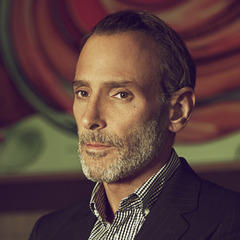
David Salle
David Salle

David Salle is an influential American painter born on September 28, 1952. Known for his unique artistic style and interdisciplinary approach, Salle's work has made a significant impact in the contemporary art world. His paintings often blend various artistic techniques, including collage, photography, and painting, reflecting his profound insights into culture, society, and history. more

You May Also Like

“I'm always very grateful for stories about the great coffeehouse wits in Vienna at the turn of the last century. People would wait for a chance to stand near the table where the great wits were trading witticisms as a spectator sport because it was that good. They were that on fire and there was no product. They didn't write anything down. It was just the pleasure of engagement with the moment. I think that's my kind of ideal of how I live.”

“I do work hard at trying to find the right expression for something, which might be like finding the right image - choosing not only the right words but down to the right number of lines. I remember being in Maine once at Colby College with Alex Katz. It houses hundreds of his works. There was a painting of just one seagull against a blue sky. I was admiring it and Alex said, "45 brush strokes exactly."”

“I only worked on that one movie, but then quickly realized that the path of being an assistant director was not gonna get me to producing. It's a different path coming up through production management and then line producing. So I basically was in the position where I was going to take any job that felt creative, like the one I got, which was reading scripts and writing coverage. So even though I was taking a job where I was making less money than the job immediately prior, it seemed like the right thing for me.”

“It takes a number of different skill sets, I think, to try and be a good producer. You have to be very creative, but you also have to be incredibly financially minded. I jokingly say the job is kind of part cheerleader and part dictator. It is both of those things, because you have to make sure that people are doing what they need to be doing, but creatively you really need to be helping each person in every job across the crew. Cheering them on, keeping them inspired into doing their best work, and you have the director's vision in the forefront.”