Quotessence
Home / Quotes / Quote by Anna Sewell

Quote by Anna Sewell

“I must say...that more unmanly, brutal treatment of a little pony it was never my painful lot to witness; and by giving way to such passion, you injure your own character as much, nay more, than you injure your horse, and remember, we shall all have to be judged according to our works, whether they be towards man or towards beast.”

Quote by Anna Sewell

Author
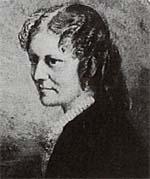
Anna Sewell
Anna Sewell

Anna Sewell, a British novelist, was born on March 30, 1820, and passed away on April 25, 1878. She is best known for her novel 'Black Beauty,' which tells the story from the perspective of a horse and has had a profound impact on the animal rights movement. more

You May Also Like

“Standing before you as the advocate of the lower races, I declare what I believe cannot be gainsaid...that just so soon and so far as we pour into all our schools the songs, the poems, and literature of mercy toward these lower creatures, just so soon and so far shall we reach the roots not only of cruelty, but of crime.”

“Some years ago I wrote a book called The House on Eccles Street. To write this book I had to think my way into the existence of Marion Bloom...Marion Bloom was a figment of James Joyce's imagination. If I can think my way into the existence of a being who has never existed, then I can think my way into the existence of a bat or a chimpanzee or an oyster, any being with whom I share the substrate of life.”

“Anyone who says that life matters less to an animal than it does to us has not held in his hands an animal fighting for its life. The whole of the being of the animal is thrown into that fight, without reserve. When you say that the fight lacks a dimension of intellectual or imaginative horror, I agree. It is not the mode of being animals to have an intellectual horror: their whole being is in the living flesh...I urge you to walk, flank to flank, beside the beast that is prodded down the chute to his executioner.”

“I believe that pity is a law like justice, and that kindness is a duty like uprightness. That which is weak has a right to the kindness and pity of that which is strong. In the relations of man with the animals...there is a great ethic, scarcely perceived as yet, which will at length break through into the light, and which will be the corollary and the complement to humans ethics. Are there not here unsounded depths for the thinker? Is one to think oneself mad because one has the sentiment of universal pity in one's heart?”

“To me, a philosopher who says that the distinction between human and nonhuman depends on whether you have a white or a black skin, and a philosopher who says that the distinction between human and nonhuman depends on whether or not you know the difference between a subject and a predicate, are more alike than they are unlike.”