Quotessence
Home / Quotes / Quote by C. S. Lewis

Quote by C. S. Lewis

“In justifying cruelty to animals we put ourselves also on the animal level. We choose the jungle and must abide by our choice.”

Quote by C. S. Lewis

Author
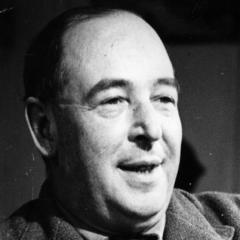
C. S. Lewis
C. S. Lewis

C. S. Lewis was a British novelist, academic, and Christian theologian. He is renowned for his fictional works, particularly The Chronicles of Narnia, a series of fantasy novels that have become a beloved classic of children's literature. Lewis also penned adult fiction, including the science fiction trilogy Out of the Silent Planet and the space trilogy. His non-fiction works, such as Mere Christianity and The Problem of Pain, have had a significant impact on Christian thought and spirituality. more

You May Also Like

“Anyone who says that life matters less to an animal than it does to us has not held in his hands an animal fighting for its life. The whole of the being of the animal is thrown into that fight, without reserve. When you say that the fight lacks a dimension of intellectual or imaginative horror, I agree. It is not the mode of being animals to have an intellectual horror: their whole being is in the living flesh...I urge you to walk, flank to flank, beside the beast that is prodded down the chute to his executioner.”

“I believe that pity is a law like justice, and that kindness is a duty like uprightness. That which is weak has a right to the kindness and pity of that which is strong. In the relations of man with the animals...there is a great ethic, scarcely perceived as yet, which will at length break through into the light, and which will be the corollary and the complement to humans ethics. Are there not here unsounded depths for the thinker? Is one to think oneself mad because one has the sentiment of universal pity in one's heart?”

“To me, a philosopher who says that the distinction between human and nonhuman depends on whether you have a white or a black skin, and a philosopher who says that the distinction between human and nonhuman depends on whether or not you know the difference between a subject and a predicate, are more alike than they are unlike.”