Quotessence
Home / Quotes / Quote by Edward Sapir

Quote by Edward Sapir

Work

Selected Writings in Language, Culture and Personality

This book compiles a variety of scholarly essays that delve into the complex relationships between linguistic expressions, cultural norms, and the unique characteristics of individuals. The essays cover a range of topics, including the influence of language on thought processes, the role of culture in shaping identity, and the ways in which personality is expressed through language and cultural practices. more

Author
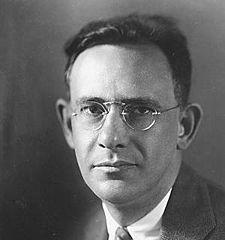
Edward Sapir
Edward Sapir

Edward Sapir was a prominent American anthropologist known for his profound research on language and culture. Born on January 26, 1884, and passing away on February 4, 1939, Sapir's work had a profound impact on the development of modern anthropology, particularly in the fields of linguistic anthropology and semiotics. more

You May Also Like

“It would be naïve to imagine that any analysis of experience is dependent on pattern expressed in language. Any concept, whether or not it forms part of the system of grammatical categories, can be conveyed in any language. If a notion is lacking in a given series, it implies a different configuration and not a lack of expressive power.”

“Consciousness is never experienced in the plural, only in the singular. Not only has none of us ever experienced more than one consciousness, but there is also no trace of circumstantial evidence of this ever happening anywhere in the world. If I say that there cannot be more than one consciousness in the same mind, this seems a blunt tautology - we are quite unable to imagine the contrary...”

“The unphilosophical and philosophical attitudes can be very sharply distinguished (with scarcely any intermediate forms) by the fact that the first accepts everything that happens as regards its general form, and finds occasion for surprise only in that special content by which something that happens here today differs from what happened there yesterday; whereas for the second, it is precisely the common features of all experience, such as characterise everything we encounter, which are the primary and most profound occasion for astonishment.”

“Some of the beliefs and legends bequethed to us by Antquity are so universally and firmly established that we have become accustomed to consider them as being almost as ancient as humanity itself. Nevertheless we are tempted to inquire how far the fact that some of these beliefs and legends have so many features in common is due to chance, and wether the similarity between them may not point to the exestience of an ancient, totally unknown and unsuspected civilization of which all other traces have disappeared.”