Quotessence
Home / Quotes / Quote by Charles Proteus Steinmetz

Quote by Charles Proteus Steinmetz

Author
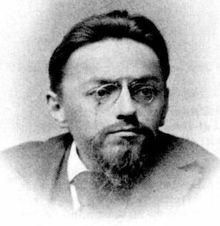
Charles Proteus Steinmetz

Charles Proteus Steinmetz, born on April 9, 1865, in Germany, and died on October 26, 1923, in the United States, was a prominent mathematician, electrical engineer, and inventor during the late 19th and early 20th centuries. He made significant contributions to the fields of electrical system analysis, motor design, and electrical engineering, often referred to as the 'Edison of the electrical field'. more

You May Also Like

“The argument from design stands or falls on whether it can be demonstrated that some aspect of the universe such as its origin or biological life could not have come about naturally. The burden of proof is ... on the supernaturalist to demonstrate that something from outside nature must be introduced to explain the data.”

“The truth wears longer than all the gods; for it is only in the truth's service, and for love of it, that people have overthrown the gods and at last God himself. "The truth" outlasts the downfall of the world of gods, for it is the immortal soul of this transitory world of gods; it is Deity itself.”

“Before what is sacred, people lose all sense of power and all confidence; they occupy a powerless and humble attitude toward it. And yet no thing is sacred of itself, but by my declaring it sacred, by my declaration, my judgment, my bending the knee; in short, by my conscience.”

“What chiefly concerns and alarms many of us are the problems arising from religious fanaticism. As long as large numbers of militant enthusiasts are persuaded that they alone have access to the truth, and that the rest of us are infidels, we remain under threat. Lord Acton's famous phrase about power can be used of another danger. Dogma tends to corrupt, and absolute dogma corrupts absolutely.”

“If there be a mind that, not perceiving in the narratives we have compared the fingermarks of tradition, and hence the legendary character of these evangelical anecdotes, still leans to the historical interpretation, whether natural or supernatural; that mind must be alike ignorant of the true character both of legend and of history, of the natural and the supernatural.”