“Rash oaths, whether kept or broken, frequently produce guilt.”
Quote by Samuel Johnson
Work
The Beauties of Samuel Johnson, LL.D.: Consisting of Maxims and Observations, Moral, Critical, and Miscellaneous, to which are Now Added, Biographical Anecdotes of the Doctor, Selected from the Late Productions of Mrs. Piozzi, Mr. Boswell, ...
This book is a compilation of moral, critical, and miscellaneous observations by the renowned Samuel Johnson, LL.D. It includes biographical anecdotes about Johnson, drawn from the writings of Mrs. Piozzi and Mr. Boswell. The work offers insights into Johnson's thoughts and life, as well as providing a glimpse into the historical context of the time. more
Author
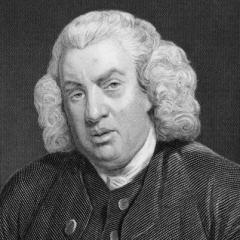
Samuel Johnson
Samuel Johnson was an English writer, poet, and lexicographer, renowned for his comprehensive English dictionary, 'A Dictionary of the English Language', published in 1755. His distinctive writing style and wit have cemented his place as a significant figure in the history of English literature. more
You May Also Like
Source: Selected essays
Source: Rasselas
“Instead of rating the man by his performances, we rate too frequently the performances by the man.”
Source: The Rambler: In Four Volumes
Source: The Works of Samuel Johnson, L. L. D.: In Twelve Volumes
Source: The Works of Samuel Johnson, LL.D..: The Rambler
Source: Essays from the Rambler, Adventurer, and Idler
“The public pleasures of far the greater part of mankind are counterfeit.”
Source: The Idler
Source: A Journey to the Western Islands of Scotland and the Journal of a Tour to the Hebrides