“...You know the mistrust of heights is the mistrust of self, you don't know whether you're going to jump.”
Book:White Oleander
“...You know the mistrust of heights is the mistrust of self, you don't know whether you're going to jump.”
White Oleander is a work of fiction that follows the life of Astrid Magnussen, a girl whose mother, Ingrid, is a brilliant but narcissistic poet. After Ingrid is sentenced to prison for murder, Astrid is placed into a series of foster homes across Southern California. Each home presents a different set of challenges and influences, shaping Astrid's identity as she grows from a child into a young woman. The narrative explores themes of resilience, the search for belonging, and the powerful, often destructive, bond between mother and daughter. The title refers to a poisonous flowering shrub, serving as a metaphor for Ingrid's beautiful yet dangerous influence on her daughter's life. more
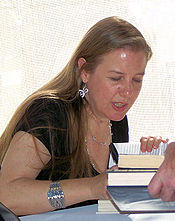
Janet Fitch is a renowned American contemporary author, born on November 9, 1955, in California. Her works are known for their profound character development and unique narrative style, with notable titles including 'The Geeks' and 'Paint It Black'. more
“The fire that warms us can also consume us; it is not the fault of the fire.”
“Nobody these days holds the written word in such high esteem as police states do.”
“Imitation is not just the sincerest form of flattery - it's the sincerest form of learning.”