Quotessence
Home / Quotes / Quote by Adam Reed

Quote by Adam Reed

“I was telling somebody about in grammar school we used to have the duck-and-cover drills where we'd have to go down to a fallout shelter in the basement. We'd sit on our butts on the ground next to the wall with a textbook over our heads and our knees sort of drawn up to our chest. I don't think they still do that. They're sort of sobering. You leave recess and come in for the apocalypse drill.”

Quote by Adam Reed

Author
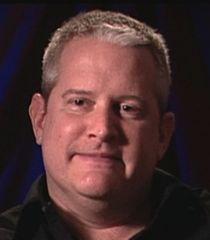
Adam Reed
Adam Reed

Adam Reed, born on January 8, 1970, is an accomplished American actor known for his exceptional voice work in animation and television. He is particularly recognized for his role as 'Lenny Leonard' in 'The Simpsons' and for his leading role in 'Archer'. more

You May Also Like

“In fact, now for whatever reason, if we're recording in the same room, I get a little distracted because I'm watching the actor instead of listening to the actor. The way we do it now, they're on the phone, and we're sitting here with scripts in front of us taking notes seriously and marking takes and doing some adlibs. I can really focus on the words and not the surroundings.”

“I think it started with both the shows and the box set from finishing White Material. I think we were also pretty desperate to get it released. We felt pretty proud of it, and it just escalated from there. We were thinking about playing some live shows, doing the soundtracks live. It was just trying to shine a little light on this 15 years of work we've done.”

“I'm still exploring. As I look back, Nénette Et Boni had a massive effect on the album we made after it, Curtains. I think it's been like that all the way through. Trouble Every Day had a massive effect on Can Our Love... I think it's allowed us to raise our heads, take a bit of a left turn, explore different avenues, and then come back to our own thing and see it in a different way.”

“When I see a movie, the music often gets in the way for me. It's something that, say, for myself and Claire, we never, ever speak about. We never speak about describing emotion. I think it's about color and movement. And I think it's important to let the images be the melody, as well, a lot of the time - to create a kind of a backing for that, to let it sing.”