“And all these questions I ask myself. It is not in a spirit of curiosity. I cannot be silent. About myself I need know nothing. Here all is clear. No, all is not clear. But the discourse must go on. So one invents obscurities. Rhetoric.”
Quote by Samuel Beckett
Work
Three Novels: Molloy, Malone Dies, The Unnamable
This collection includes three interconnected novels that delve into complex philosophical concepts, examining the nature of existence, the limits of language, and the search for meaning in a chaotic world. more
Author
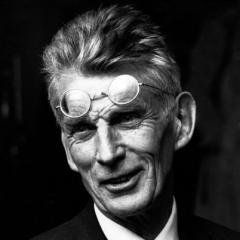
Samuel Beckett
Samuel Beckett was an Irish novelist, playwright, and poet, widely regarded as one of the most influential writers of the 20th century. His works are characterized by their minimalist style, existential themes, and use of language. His most famous works include 'Waiting for Godot' and 'Molloy'. Beckett was awarded the Nobel Prize in Literature in 1969. more
You May Also Like
Source: LISTENING POINT
Source: Clapton: The Autobiography
“...it's the process of losing oneself in the jungle that makes science worth doing.”
“Busy, curious, thirsty fly, Drink with me, and drink as I.”
“As Tammie glow'red, amazed and curious, The mirth and fun grew fast and furious.”