Quotessence
Home / Quotes / Quote by William Shakespeare

Quote by William Shakespeare

“What is a man, If his chief good and market of his time Be but to sleep and feed? A beast, no more. Sure He that made us with such large discourse, Looking before and after, gave us not That capability and godlike reason To fust in us unused. Now, whether it be Bestial oblivion, or some craven scruple Of thinking too precisely on th'event - A thought which, quartered, hath but one part wisdom And ever three parts coward - I do not know Why yet I live to say 'This thing's to do', Sith I have cause, and will, and strength and means To do't.”

Quote by William Shakespeare

Book:Hamlet

Work

Hamlet

Hamlet, a prince of Denmark, returns home after his father's death to find his uncle on the throne and his mother married to him. The play explores themes of madness, betrayal, and moral ambiguity as Hamlet seeks to avenge his father's murder. Its rich language and intricate plot have made it a cornerstone of Western literature. more

Author

William Shakespeare
William Shakespeare

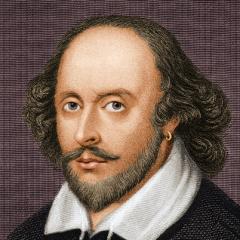
William Shakespeare (1564 - April 23, 1616) was one of the greatest poets of the English Renaissance, renowned for his dramatic works. His plays spanned a variety of genres, including tragedy, comedy, and history, and have had a profound impact on literature worldwide. more

You May Also Like

“Good apologetics is a blessing to the church and to the world; the early church proved this. A valid apologetic, however, follows faith and does not attempt to argue the truth of revelation in an a priori fashion. Christians need not hide from their opponents in embarrassed silence; the Christian faith is the only worldview that fits the reality of life. Apologetic intellectual labor should not lead to exaggerated expectations nor deny the genuine subjectivity of Christian truth. Relying on reason to convert or ground the faith on intellectual grounds alone will always disappoint.”

“For Hume, Pyrrhonism, like other philosophies, is too ready to assume that our actions are, or at least ought to be, guided by reason at all times. That is looking in the wrong place for the sources of our motivation. The world itself never provides adequate motivation for our choices. It is not the weighing of external evidence but internal desire that determines judgement and action: ‘Nothing can oppose or retard the impulse of passion, but a contrary impulse.’ Indeed, as Bernard Williams later argued, perhaps the very idea of a (purely) external reason is incoherent because there is no account of what is involved in accepting an external reason that does not invoke internal motivation.”

“My reason is simply a greedy lawyer hired by my guilty instincts, feelings, and values to prove them innocent. This lawyer is responsible to conserve and protect my identity from sudden changes. If I adjust my beliefs too quickly and too often—I risk going insane. I’m open-minded only in the sense that my mind is closed by openable windows.”

“Then one morning she’d begun to feel her sorrow easing, like something jagged that had cut into her so long it had finally dulled its edges, worn itself down. That same day Rachel couldn’t remember which side her father had parted his hair on, and she’d realized again what she’d learned at five when her mother left – that what made losing someone you loved bearable was not remembering but forgetting. Forgetting the small things first, the smell of the soap her mother had bathed with, the color of the dress she’d worn to church, then after a while the sound of her mother’s voice, the color of her hair. It amazed Rachel how much you could forget, and everything you forgot made that person less alive inside you until you could finally endure it. After more time passed you could let yourself remember, even want to remember. But even then what you felt those first days could return and remind you the grief that was still there, like old barbed wire embedded in a tree’s heartwood.”

“Schopenhauer’s will can be “equated” to the categorical imperative of the idea (reason), which is the will. Without the will, the idea is dead. If the idea is the essence of the Being, then the will is its manifestation as existence. Only through the categorical will of the essence (ultimate universal idea) is existence possible.”