Quotessence
Home / Quotes / Quote by Martin Luther

Quote by Martin Luther

“I am much afraid that the universities will prove to be the great gates of hell, unless they diligently labour in explaining the Holy Scriptures, and engraving them in the hearts of youth. I advise no one to place his child where the Scriptures do not reign paramount. Every institution in which men are not unceasingly occupied with the Word of God must become corrupt.”

Quote by Martin Luther

Author
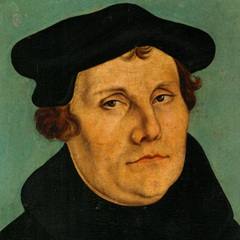
Martin Luther
Martin Luther

Martin Luther, born on November 10, 1483 and died on February 18, 1546, was a significant figure in the German Reformation. He was a monk, theologian, philosopher, and writer, known for his leading role in the Reformation. Luther challenged the authority of the Roman Catholic Church and translated the Bible into German, which had a profound impact on German culture and religion. more

You May Also Like

“He had the tool to break down the walls that imprisoned his people. He had the tool to rip away the veil to the Holy of Holies so that his flock could come before the Lord and be cleansed, made whole, transformed, and have a personal, loving relationship with their creator. That very tool san on Hannah's bookshelf right now, gathering dust until Sunday morning. Her Savior was there, waiting to speak to her and show her the way home again, the way back to love. YOUR WORD IS LIFE! Why didn't more people understand that?”

“When you live by God’s Word, your life works. When you live without God’s Word, life doesn’t work. God’s Word builds you up, feeds your soul, and gives you strength, direction, guidance, hope, encouragement, and faith. Remember that He gave you His Word so that you would know Him and the way He wants You to live.”

“Well, he'd get help from the Bible. It was all inspired, every word, no matter what scoffers like Jim said. He'd take the first text he turned to and talk on that. He opened on: 'Now THEREFORE, Tatnai, governor beyond the river, Shethar-boznai, and your companions the Apharsachites, which ARE beyond the river, be ye far from thence,' an injunction spirited but not at present helpful.”

“Layer upon layer it comes, dense and rich within the texts, echo upon echo, allusion and resonance tumbling over one another, so that for those with ears to hear it becomes un-missable, a crescendo of questions to which in the end there can be only one answer. Why are you speaking like this? Are you the one who is to come? Can anything good come out of Nazareth? What sign can you show us? Why does he eat with tax-collectors and sinners? Where did this man get all this wisdom? How can this man give us his flesh to eat? Who are you? Why do you not follow the traditions? Do the authorities think he’s the Messiah? Can the Messiah come from Galilee? Why are you behaving unlawfully? Who then is this? Aren’t we right to say that you’re a Samaritan and have a demon? What do you say about him? By what right are you doing these things? Who is this Son of Man? Should we pay tribute to Caesar? And climactically: Are you the king of the Jews? What is truth? Where are you from? Are you the Messiah, the son of the Blessed One? Then finally, too late for answers, but not too late for irony: Aren’t you the Messiah? Save yourself and us! If you’re the Messiah, why don’t you come down from that cross? … And Jesus had his own questions. Who do you say I am? Do you believe in the Son of Man? Can you drink the cup I’m going to drink? How do the scribes say that the Messiah is David’s son? Couldn’t you keep watch with me for a single hour? And finally and horribly: My God, my God, why did you abandon me? … The reason there were so many questions, in both directions, was that–as historians have concluded for many years now–Jesus fitted no ready-made categories”