Quotessence
Home / Quotes / Quote by James Sallis

Quote by James Sallis

“What’d you need?" "Desuetude." "Reading again, are we? Could be dangerous. It means to become unaccustomed to. As in something gets discontinued, falls into disuse." "Thanks, man." "That it?" "Yeah, but we should grab a drink sometime.”
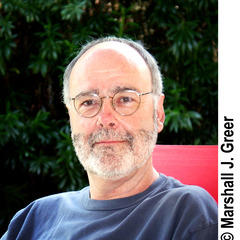
Quote by James Sallis

Book:Drive

Work

Drive

Browse quotes and source details for this work. more

Author

James Sallis
James Sallis

James Sallis, born on December 21, 1944, is an American writer known for his unique narrative style and profound philosophical insights. His works span across various genres including novels, short stories, poetry, and plays, earning him widespread acclaim and numerous literary awards. more

You May Also Like

“Estamos absurdamente acostumados ao milagre de que uns poucos sinais escritos são capazes de conter imagens imortais, espirais de pensamentos, novos mundos com pessoas vivas que falam, choram e riem. Aceitamos isso com tanta simplicidade que de certo modo, pelo próprio ato da aceitação insensível e rotineira, desfazemos a obra de todos os tempos, a história do desenvolvimento gradual da descrição e construção poéticas, do hominídeo a Browning, do troglodita a Keats. Que aconteceria se acordássemos um dia, todos nós, e descobríssemos que éramos totalmente incapazes de ler? Quero que vocês se maravilhem não apenas com o que lêem, mas com o milagre de que algo seja passível de ser lido.”

“So go ahead. Do it—open the book. See? You see me, right? And I see you. See? I am reading your face, your eyes, your lips. I know the sufferdust on your brow. I can see you reading and I can tell, too, when you are here, when you’re absent, what you’ve read and how it affects you. There is no more hiding. I see your chords—your fractures, your cold gifts, where and when you’ve hurt people and why. It’s all right there—your stories are written right there on your face!”

“We've inherited many ideas about writing that emerged in the eighteenth century, especially an interest in literature as both an expression and an exploration of the self. This development — part of what distinguishes the "modern" from the "early modern" — has shaped the work of many of our most celebrated authors, whose personal experiences indelibly and visibly mark their writing. It's fair to say that the fiction and poetry of many of the finest writers of the past century or so — and I'm thinking here of Conrad, Proust, Lawrence, Joyce, Woolf, Kafka, Plath, Ellison, Lowell, Sexton, Roth, and Coetzee, to name but a few — have been deeply autobiographical. The link between the life and the work is one of the things we're curious about and look for when we pick up the latest book by a favorite author.”