Quotessence
Home / Quotes / Quote by Richard Wright

Quote by Richard Wright

“I feel that for white America to understand the significance of the problem of the Negro will take a bigger and tougher America than any we have yet known. I feel that America's past is too shallow, her national character too superficially optimistic, her very morality too suffused with color hate for her to accomplish so vast and complex a task. Culturally the Negro represents a paradox: Though he is an organic part of the nation, he is excluded by the ride and direction of American culture. Frankly, it is felt to be right to exclude him, and it if felt to be wrong to admit him freely. Therefore if, within the confines of its present culture, the nation ever seeks to purge itself of its color hate, it will find itself at war with itself, convulsed by a spasm of emotional and moral confusion. If the nation ever finds itself examining its real relation to the Negro, it will find itself doing infinitely more than that; for the anti-Negro attitude of whites represents but a tiny part - though a symbolically significant one - of the moral attitude of the nation. Our too-young and too-new America, lusty because it is lonely, aggressive because it is afraid, insists upon seeing the world in terms of good and bad, the holy and the evil, the high and the low, the white and the black; our America is frightened of fact, of history, of processes, of necessity. It hugs the easy way of damning those whom it cannot understand, of excluding those who look different, and it salves its conscience with a self-draped cloak of righteousness. Am I damning my native land? No; for I, too, share these faults of character! And I really do not think that America, adolescent and cocksure, a stranger to suffering and travail, an enemy of passion and sacrifice, is ready to probe into its most fundamental beliefs.”

Quote by Richard Wright

Work

Black Boy

This classic novel delves into the life of a young African American man as he navigates the complexities of race, identity, and social justice in the early 20th century United States. more

Author

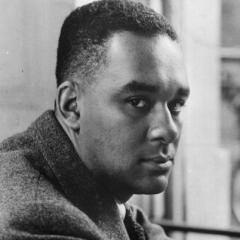
Richard Wright
Richard Wright

Richard Wright (September 4, 1908 - November 28, 1960) was an influential American author whose works profoundly exposed racial discrimination and social injustice, leaving a lasting impact on American literature. more

You May Also Like

“It's not putting black lives on a pedestal, I don't even know what that means," I said, my heart beating fast. "It's saying that black lives, at this point, and historically, do not, and have not mattered, and that they should!" I looked first at Gina, then around the room to see if anyone was going to back me up. Instead, I was met with what I'd been trying to pretend hadn't always been a room full of white not-quite-liberals whose opinions, like their money, had been inherited.”

“Any Black person in amerika, if they are honest with themselves, have got to come to the conclusion that they don’t know what it feels like to be free. We aren’t free politically, economically, or socially. We have very little power over what happens in our lives. In fact, a Black person in amerika isn’t even free to walk down the street. Walk down the wrong street, in the wrong neighborhood at night, and you know what happens.”

“Instead of a mass movement saying 'No, we don't want [police],' the mass movement is saying 'How do we reform them? How do we hold a couple of them accountable?' The conversation should be: 'Why are they even here?' There are obviously many of us who have had that conversation, but it hasn't been the popular dialogue. Why do the police even exist? What are their origins? Many of us understand that their original task was to patrol slaves. Many of us understand that the first sheriff's department patrolled the US-Mexico border. That's not the public discourse. This has everything to do with the position that they've played in the last thirty years. It's also deeply rooted in anti-Black racism. The idea of not having police scares people. People say, 'What are we going to do with criminals?' by which they mean 'What are we going to do with Black people?' I believe we should abolish the police. I think they are extremely dangerous and will continue to be. That doesn't mean I don't believe in police reform...We do have to deal with the current crisis in the short term. That's important. We have to have solutions for people's real-life problems, and we have to allow people to decide what those solutions are. We also have to create a vision that's much bigger than the one we have right now. I was talking to one of the organizers in Ferguson. I said to her, this work is bigger than us. It's bigger than Black people. It's bigger than humans. This is a planetary crisis. If we don't solve it or at least set up a system that can help solve it, I don't think we'll survive.”