“It's like you took a bottle of ink and you threw it at a wall. Smash! And all that ink spread. And in the middle, it's dense, isn't it? And as it gets out on the edge, the little droplets get finer and finer and make more complicated patterns, see? So in the same way, there was a big bang at the beginning of things and it spread. And you and I, sitting here in this room, as complicated human beings, are way, way out on the fringe of that bang. We are the complicated little patterns on the end of it. Very interesting. But so we define ourselves as being only that. If you think that you are only inside your skin, you define yourself as one very complicated little curlique, way out on the edge of that explosion. Way out in space, and way out in time. Billions of years ago, you were a big bang, but now you're a complicated human being. And then we cut ourselves off, and don't feel that we're still the big bang. But you are. Depends how you define yourself. You are actually--if this is the way things started, if there was a big bang in the beginning-- you're not something that's a result of the big bang. You're not something that is a sort of puppet on the end of the process. You are still the process. You are the big bang, the original force of the universe, coming on as whoever you are. When I meet you, I see not just what you define yourself as--Mr so-and- so, Ms so-and-so, Mrs so-and-so--I see every one of you as the primordial energy of the universe coming on at me in this particular way. I know I'm that, too. But we've learned to define ourselves as separate from it.”
Quote by Alan Watts
Author
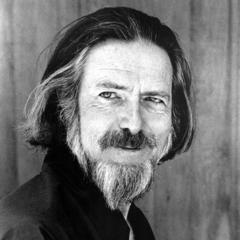
Alan Watts
Alan Watts was a British philosopher, writer, and speaker known for his exploration of the relationship between Eastern and Western thought, particularly focusing on Zen Buddhism and its influence on Western culture. His work has influenced many in the areas of spirituality, psychology, and the philosophy of science. more
You May Also Like
“To love God with all our heart, soul, and mind, and our neighbor as ourself.”
Source: The Holy Bible: King James Version
Source: Eat, Pray, Love
Source: This Is Water: Some Thoughts, Delivered on a Significant Occasion, about Living a Compassionate Life
Source: Zen and the Art of Motorcycle Maintenance: An Inquiry Into Values
“Nothing can be gained by extensive study and wide reading. Give them up immediately.”
Source: A Primer of Soto Zen: A Translation of Dogen's Shobogenzo Zuimonki
Source: Markings
Source: The Dead-end (Up) Here: Shiva You Do Not See, Screams You Do Not Hear
Source: Zen Mind, Beginner's Mind: Informal Talks on Zen Meditation and Practice