Quotessence
Home / Quotes / Quote by Camille Paglia

Quote by Camille Paglia

“Not untill all babies are born from glass jars will the combat cease between mother and son. But in a totalitarian future that has removed procreation from woman's hands, there will also be no affect and no art. Men will be machines, without pain but also without pleasure. Imagination has a price, which we are paying every day. There is no escape from the biologic chains that bind us.”

Quote by Camille Paglia

Work

Sexual Personae: Art and Decadence from Nefertiti to Emily Dickinson

This comprehensive study delves into the depiction of sexuality in art and literature, analyzing the works of artists and writers from ancient Egypt to the 19th century. The book examines the complex interplay between art, culture, and human sexuality, offering insights into the evolution of artistic expression and its relationship with societal norms. more

Author
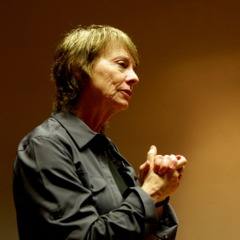
Camille Paglia
Camille Paglia

Camille Paglia is an American academic, cultural critic, and author known for her controversial views on a variety of cultural and social issues. Born on April 2, 1947, she has taught at several universities and has written numerous books and articles on topics such as art, literature, and gender studies. more

You May Also Like

“If [a man] spent his money, say, in giving parties for his friends, they (we may hope) would get pleasure, and so would all those upon whom he spent money, such as the butcher, the baker, and the bootlegger. But if he spends it (let us say) upon laying down rails for surface cars in some place where surface cars turn out not to be wanted, he has diverted a mass of labor into channels where it gives pleasure to no one. Nevertheless, when he becomes poor through failure of his investment he will be regarded as a victim of undeserved misfortune, whereas the gay spendthrift, who has spent his money philanthropically, will be despised as a fool and a frivolous person.”

“The moment after, I began to respire 20 quarts of unmingled nitrous oxide. A thrilling, extending from the chest to the extremities, was almost immediately produced. I felt a sense of tangible extension highly pleasurable in every limb; my visible impressions were dazzling, and apparently magnified, I heard distinctly every sound in the room and was perfectly aware of my situation. By degrees, as the pleasurable sensations increased, I last all connection with external things; trains of vivid visible images rapidly passed through my mind, and were connected with words in such a manner, as to produce perceptions perfectly novel. I existed in a world of newly connected and newly modified ideas. I theorised—I imagined that I made discoveries. When I was awakened from this semi-delirious trance by Dr. Kinglake, who took the bag from my mouth, indignation and pride were the first feelings produced by the sight of the persons about me. My emotions were enthusiastic and sublime; and for a minute I walked round the room, perfectly regardless of what was said to me. As I recovered my former state of mind, I felt an inclination to communicate the discoveries I had made during the experiment. I endeavoured to recall the ideas, they were feeble and indistinct; one collection of terms, however, presented itself: and with the most intense belief and prophetic manner, I exclaimed to Dr Kinglake, 'Nothing exists but thoughts!—the universe is composed of impressions, ideas, pleasures and pains!”

“The chief means of liberating women is replacing of compulsiveness and compulsion by the pleasure principle. Cooking, clothes, beauty, and housekeeping are all compulsive activities in which the anxiety quotient has long since replaced the pleasure or achievement quotient. It is possible to use even cooking, clothes, cosmetics and housekeeping for fun. The essence of pleasure is spontaneity. In these cases spontaneity means rejecting the norm, the standard that one must live up to, and establishing a self-regulating principle.”

“Pleasure, in itself harmless, may become mischievous, by endearing to us a state which we know to be transient and probatory, and withdrawing our thoughts from that of which every hour brings us nearer to the beginning, and of which no length of time will bring us to the end. Mortification is not virtuous in itself, nor has any other use, but that it disengages us from the allurements of sense. In the state of future perfection, to which we all aspire, there will be pleasure without danger, and security without restraint.”

“Oh yes," said Jana. "You want the birdbath." She let him down onto the rim of the birdbath, then watched as he dipped his head, lowered his chest into the water, and raised it. Having finished his bath, he did a dance of sheer joy, flapping his wings and shaking off the water in a circle of drops. "He enjoys life," said a voice. Mr. Powell the optometrist, a closed umbrella in hand, was letting his two dachshunds chase each other around the park. "As do your dogs," said Jana. "Yes," said Mr. Powell,"they have fun in a simpler and more joyous way than most humans do. Their pleasures seem more reliable. All you have to do is say the word 'walk' and they're wiggling from head to toe....”